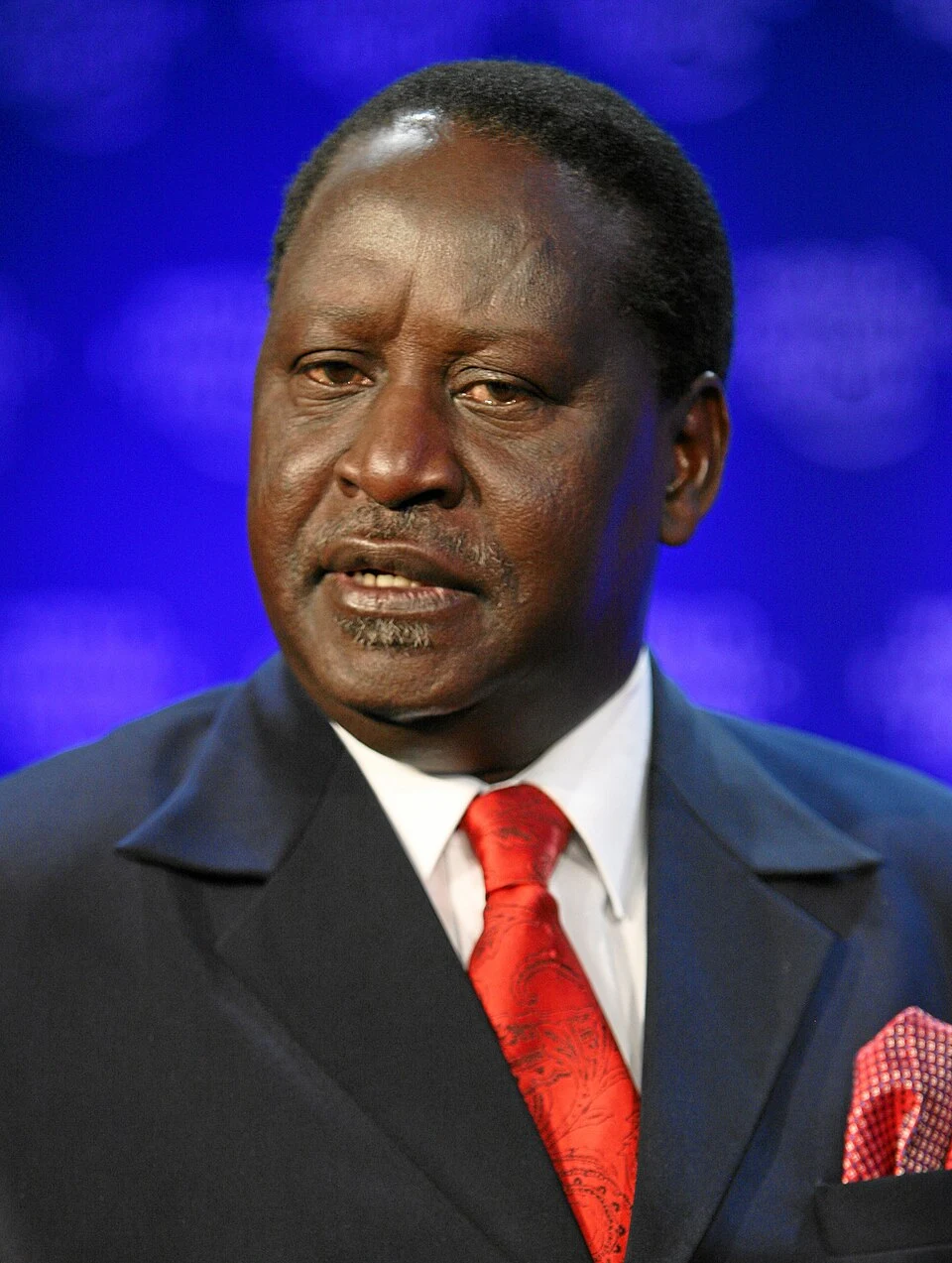
Raila Odinga at the World Economic Forum in Davos, January 2009.
World Economic Forum from Cologny, Switzerland / CC BY-SA 2.0. Resized for the archive. Image credits.

Raila Odinga
Former Prime Minister · Democracy and constitutional reform campaigner
1945 – 2025
His long struggle for political space helped change the shape of the republic.
- Theme
- Public Life
- Also known as
- Raila Amolo Odinga · Baba · Agwambo
Raila Odinga occupied an unusual place in Kenyan public life: a politician whose influence extended far beyond the offices he held. To his supporters he was Baba, a leader who made their grievances audible. To his opponents he was a formidable organiser and a persistent electoral challenger. His place in this archive rests on his documented contribution to the struggle for multiparty democracy, constitutional reform and devolution. Remembering that contribution also means acknowledging that his alliances, decisions and political methods were contested.
He was born in Maseno on 7 January 1945 to Jaramogi Oginga Odinga and Mary Ajuma Odinga. His father became independent Kenya's first vice-president and later an opposition leader. Raila's education took him from schools in western Kenya to East Germany, where he studied engineering. After returning home, he taught at the University of Nairobi and worked at the Kenya Bureau of Standards. The engineer's route into national politics was therefore preceded by a career in teaching and public institutions.
During Daniel arap Moi's presidency, Odinga became an opponent of one-party rule. Following the attempted coup of 1982, he was detained without trial and remained imprisoned until 1988. Further periods of detention followed. In 1991 he sought refuge in Norway before returning to Kenya as the campaign for political pluralism gained ground. Detention and exile were substantial personal costs, and they remain central to understanding why many Kenyans associated him with the opening of democratic space.
Odinga entered Parliament as the member for Lang'ata in 1992 and represented the constituency until 2013. His career crossed several parties and coalitions. He served as energy minister and later as minister responsible for roads, public works and housing. He contested the presidency in 1997, 2007, 2013, 2017 and 2022. Those repeated campaigns made him a continuing presence in national debate, while also exposing the deep disagreements over elections, representation and political power that marked the period.
The disputed 2007 election was followed by devastating violence. Negotiations mediated by Kofi Annan produced a power-sharing settlement, and Odinga became prime minister in April 2008. He served alongside President Mwai Kibaki until 2013. The coalition was an uneasy response to a national emergency, but its significance cannot be reduced to the careers of its two principals: it was intended to restore a functioning political order after an immense human loss.
The 2010 Constitution was adopted during that coalition government. Parliament's tribute to Odinga recognised his role in the reform process and his advocacy for devolution, accountability and more equitable development. These were collective achievements involving citizens, campaigners, legislators and many other leaders. His contribution belongs within that wider history rather than replacing it. The creation of county governments gave the debate about representation a new institutional setting beyond the presidency.
His public work also extended beyond Kenya. As the African Union's High Representative for Infrastructure Development, he advocated cross-border connections and regional integration. At home, his continuing involvement in opposition politics and negotiated political arrangements drew both admiration and criticism. A useful biography leaves room for both, while distinguishing established events from the judgments people make about them.
Odinga died in India on 15 October 2025, aged 80. Parliament held special tributes, and Kenyans mourned a figure who had shaped political argument for decades. His life invites readers to consider how democratic freedoms are won, how reform moves from protest into institutions, and how a leader can remain consequential without ever becoming president.
A fuller democracy is built by many people, including those who insist that the political space must widen.
Add to this story