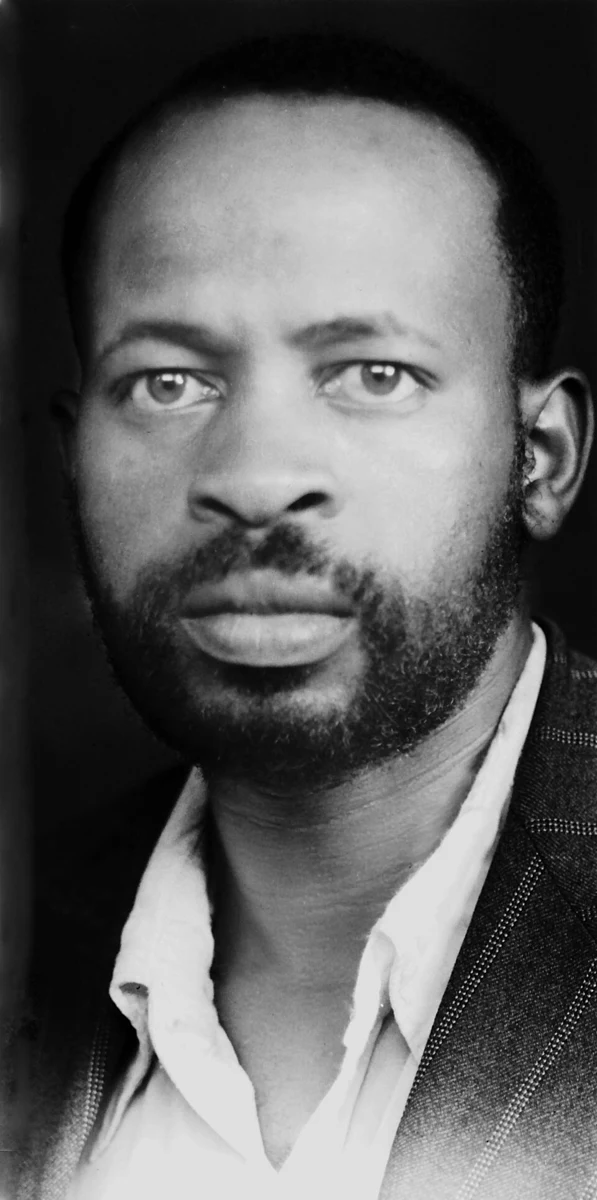
Amarjit chandan Archive / CC BY-SA 4.0. Resized for the archive. Image credits.

Bildad Kaggia
Freedom fighter and advocate for land justice
He kept asking who independence was meant to benefit.
- Theme
- Liberation
Bildad Kaggia was a trade unionist and independence activist imprisoned with the Kapenguria Six. His organising connected the demand for political freedom with the conditions facing workers and people without land.
After independence, he criticised inequality and the distribution of land. His life gives the archive an important question to hold open: whether replacing colonial government also changed the opportunities available to those who had borne its costs.
Life and work
Bildad Mwaganu Kaggia (1921 – 7 March 2005) was a Kenyan nationalist, activist, and politician. Kaggia was a member of the Mau Mau Central Committee. After independence he became a Member of Parliament. He established himself as a militant, fiery nationalist who wanted to serve the poor and landless people. Because of this he fell out irreconcilably with Jomo Kenyatta.
Kaggia was born in 1921, at Dagoretti, now part of Nairobi, where his father had moved from his home district of Mūrang'a District.
Two years later his father moved back to Murang’a. Kaggia schooled at Santamor Estate and later at the Church Missionary Society School at Kahūhia. Kaggia did very well at the exams and was selected for the famous Alliance High School. Unfortunately, his father was not able to raise the school fee and Kaggia had to take up a clerical job at the District Commissioners' Office at Murang’a. When the Second World War broke out, Kaggia was moved to the military recruiting office.
Despite hating war, Kaggia decided to join the army to seize the opportunity to travel to south-west Asia. When the War Office in London decided to create a unit in Britain to rehabilitate captured African soldiers, Kaggia applied and got the post of company quarter-sergeant, the first African to get this post.
Most of the work in the army was routine and boring. During the years in the army Kaggia engaged in many correspondence courses (journalism, trade unionism and political science) which later would serve him well during his political career. His experiences in the army made him aware of the evils from racial discrimination and colonialism. In his opinion the foreign religions in Kenya were a stepping stone to colonialism and his people had to be liberated from this as well.
Back in Kenya (1946) Kaggia denounced the church in the church. His objective was to create a purely African movement, divorced from European denominations and entirely independent of the European Church's doctrine. The new doctrine should include African customs and traditions. Kaggia had large followings in Central Province. This alarmed the church and their leaders asked the government for help. Subsequently, many times Kaggia and his followers were arrested and imprisoned for holding illegal meetings. Nevertheless, Kaggia's doctrine spread and he had followers from all denominations and his religion was spreading into other provinces, ultimately even reaching Nyanza. Kaggia was opposed to giving the movement a name, but, the people started calling it Andu a Kaggia (Kaggia's people). Later this became Dini ya Kaggia (Kaggia's religion).
Kaggia saw that indeed his religion was liberating the minds of people. They were no longer humble, European-fearing people; now they had the courage to attack the mzungu government. Consequently, Kaggia decided to leave the religious work to others and shifted his attention from spiritual liberation to political liberation.
When Kenyatta was elected chairman of KAU in 1947 Kaggia joined KAU hoping that it would become more militant. However, at national level KAU was barely functioning and Kaggia shifted his interest to the trade unions. He admired the fire and militancy of leaders like Kubai en Makhan Singh. Kaggia founded the Clerks and Commercial Workers Union and in 1948 he became its chairman. This union became a member of the general union, the Labour Trade Union of East Africa. In 1950 Kaggia became president of Labour Trade Union of East Africa. The trade unions had much support in Nairobi and they took over the KAU branch Nairobi in 1951. Kaggia was elected its general secretary.
Later the trade unions tried to take over the national leadership of KAU but this failed when the president of KAU, Jomo Kenyatta, changed the election procedure at the last moment. This almost resulted in a split of KAU, but the 'militants' decided to remain in KAU for the sake of unity.
This section adapts selected passages from Bildad Kaggia by Wikipedia contributors. It is shared under CC BY-SA 4.0. Selected passages; pronunciation guides, lists and reference markers omitted; punctuation and paragraph breaks adjusted. Photographs have separate licences.
More from Liberation
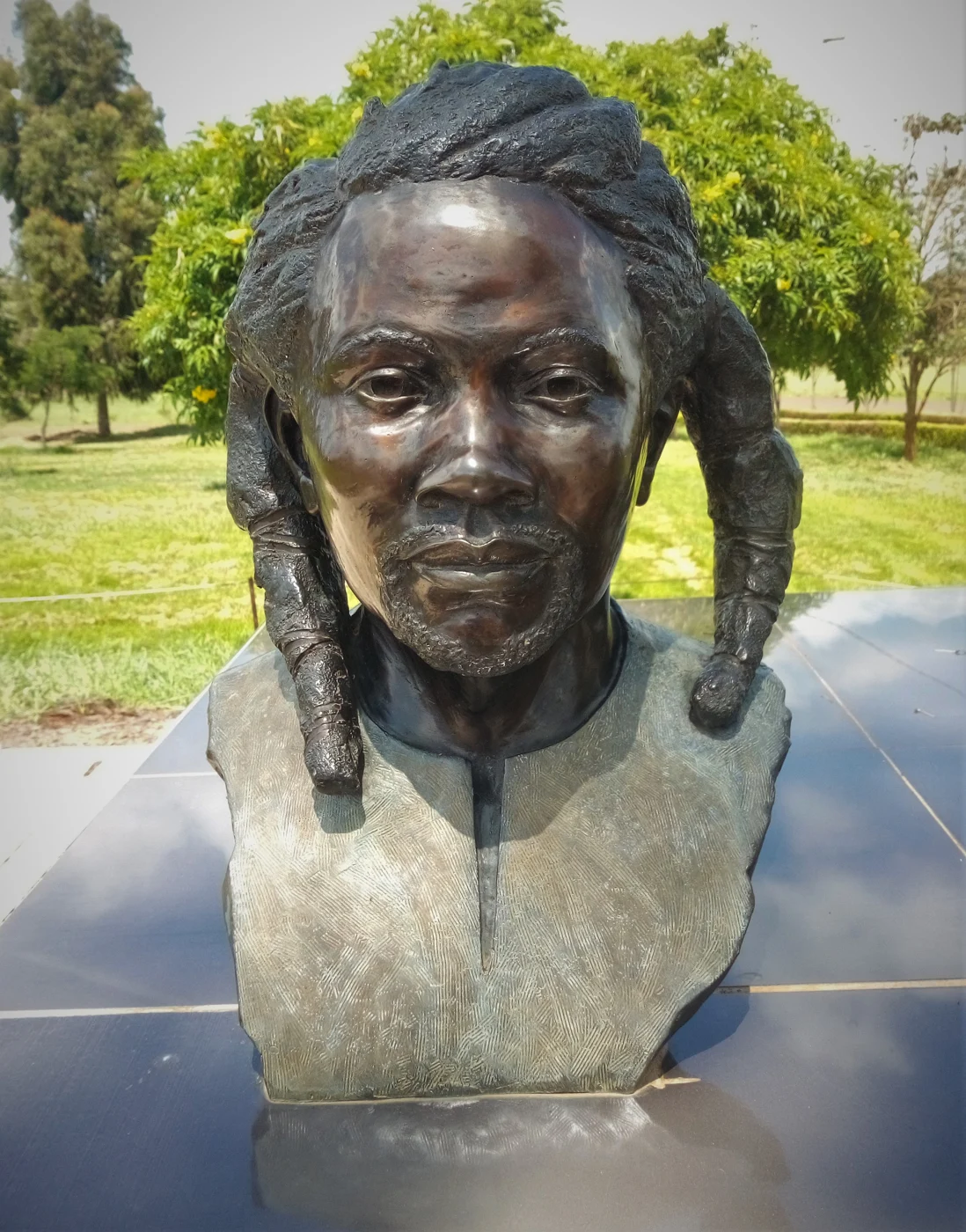
Dedan Kimathi
Field Marshal of the Mau Mau
c. 1920 – 1957 · Memorial bust
Mekatilili wa Menza
Leader of the Giriama resistance
fl. 1910s
A woman who raised a people against the empire with a dance and an oath.
Muthoni Kirima
Mau Mau Field Marshal
1930 – 2023
A woman who became a field marshal in the struggle for independence.