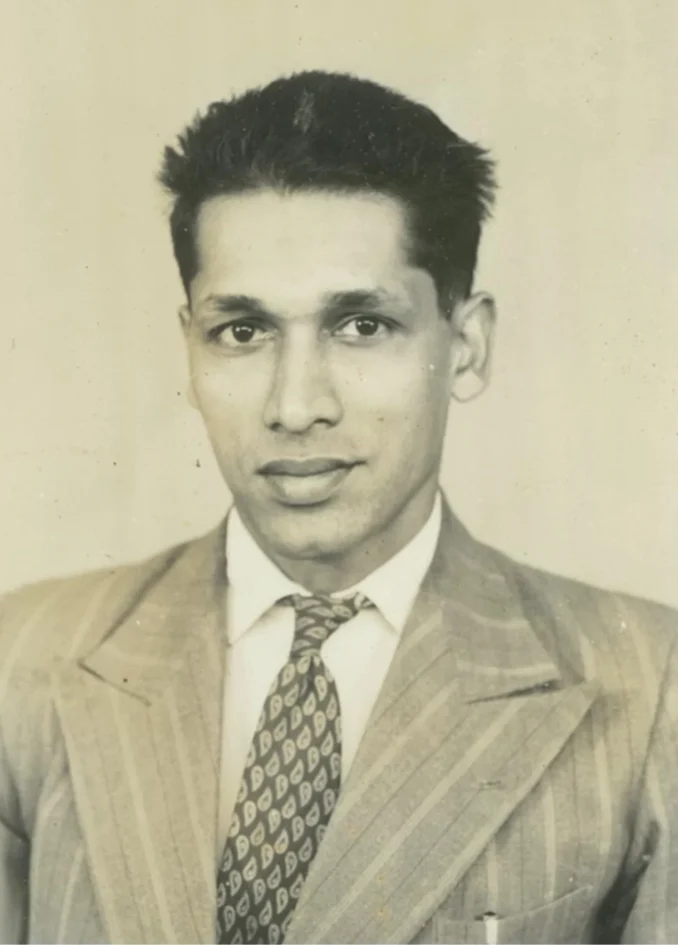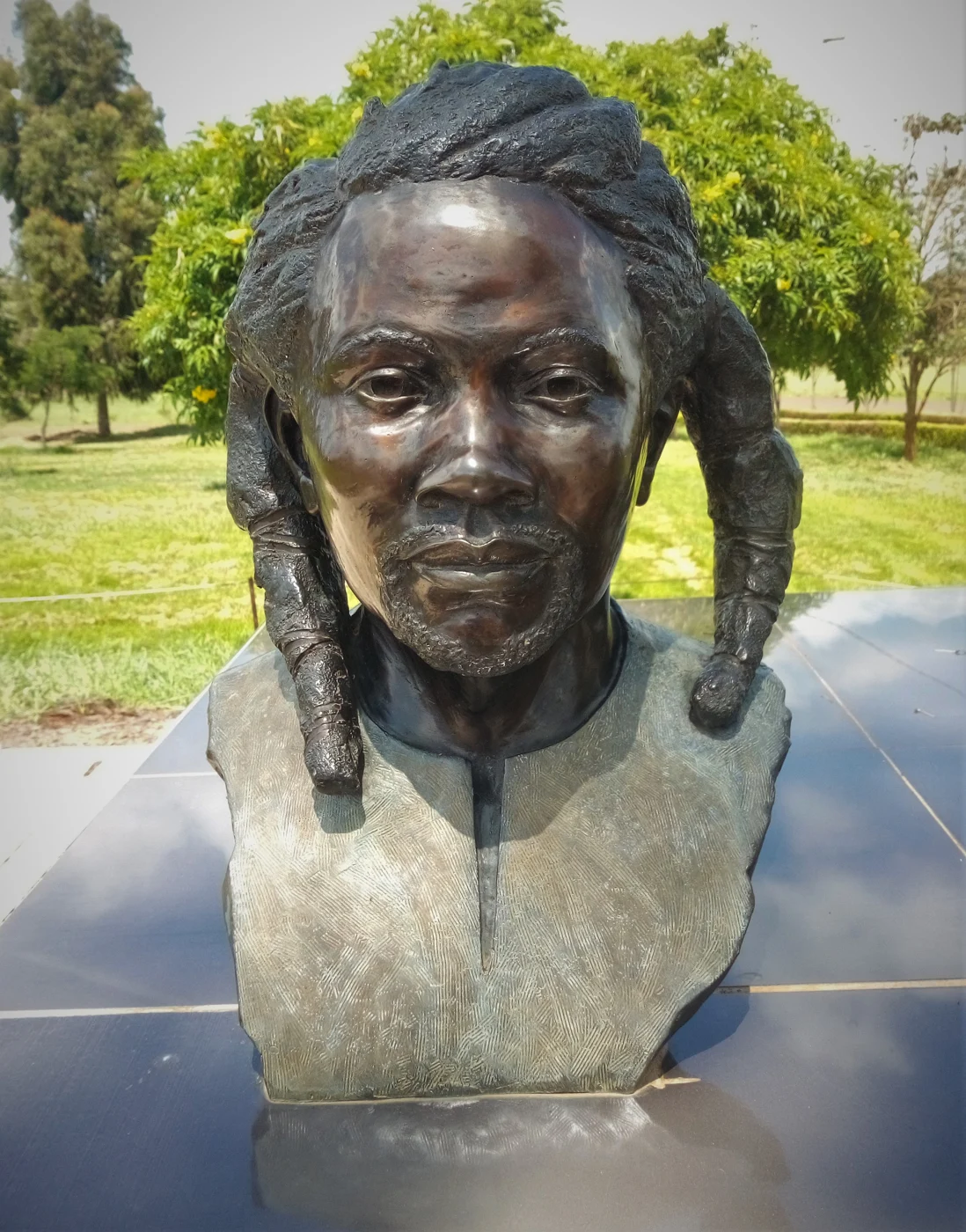
Dr Stima / CC BY-SA 4.0. Resized for the archive. Image credits.
Dedan Kimathi
Field Marshal of the Mau Mau
c. 1920 – 1957
The forest general who would not bow to an empire.
- Theme
- Liberation
- Also known as
- Field Marshal Dedan Kimathi Waciuri
Dedan Kimathi led the armed struggle of the Mau Mau from the cold forests of the Aberdares and Mount Kenya, holding out for years against the full weight of the British colonial army. A schoolteacher turned guerrilla commander, he organised, wrote, and kept a movement alive in the wilderness on conviction and discipline.
Captured in 1956 and hanged in 1957, he was buried in an unmarked grave the authorities hoped the country would forget. It never did. Today a statue of him stands in the heart of Nairobi, rifle in hand; the colony’s most wanted man become the nation’s founding symbol of defiance.
Life and work
Dedan Kĩmathi Waciũri (born Kĩmathi Waciũri; 31 October 1920 – 18 February 1957) was the leader of the Kenya Land and Freedom Army during the Mau Mau Uprising (1952–1960) against the British colonial rule in Kenya in the 1950s. He was captured by the British in 1956 and executed in 1957. Kenya gained independence in 1963. Kĩmathi is credited with leading efforts to create formal military structures within the Mau Mau, and convening a war council in 1953. He, along with Baimungi M'marete, Musa Mwariama, Kubu Kubu, General China and Mũthoni Kīrīma, was one of the Field Marshals.
Kenyan nationalists view him as a freedom fighter in the Kenyan struggle for independence, while the British colonial authorities labelled Kĩmathi as a terrorist, and according to historian David Anderson "did all they could to besmirch his reputation." Despite being viewed negatively by Kenya's first two presidents, Jomo Kenyatta and Daniel arap Moi, Kĩmathi and his fellow Mau Mau rebels were officially recognised as heroes in the struggle for Kenyan independence under the Mwai Kibaki administration, culminating in the unveiling of a Kĩmathi statue in 2007. This was reinforced by the passage of a new Constitution in 2010 calling for recognition of national heroes.
Kimathi belonged to the Ambu Clan, one of the nine clans that make the Kikuyu, Kenyas largest ethnic group, which is concentrated mainly in the central part of the East African Country.
Kĩmathi was born on 31st October 1920 in Thege village near Nyeri County in central Kenya, where his father, valuing education, sent him to school. He entered elementary school at the age of fifteen and went to join the church of Scotland mission secondary school in the region but later dropped out. Kĩmathi excelled and his skills in writing and speech were noted. Anderson writes however that Kĩmathi was fiercely competitive, bullying, and frequently disciplined by teachers. Kĩmathi traveled to Nairobi in the late 1930s and joined the British army in 1940 but, according to Anderson, was discharged after one month, allegedly for drunkenness and violence. He moved from job to job, from swineherd to primary school teacher, from which he was reportedly dismissed after accusations of violence against his pupils.
Around 1947 or 1948, while working in Ol Kalou, Kĩmathi came into contact with members of the Kenya African Union (KAU). By 1950 he had become secretary to the KAU branch at Ol Kalou, which was controlled by militant supporters of the Mau Mau cause. The Mau Mau began as the Kenya Land and Freedom Army (KLFA), a militant Kikuyu, Embu and Meru army which sought to reclaim land, which the British settlers had gradually stripped away from them. Later the term MAU MAU came to mean "Mzungu Arudi Ulaya, mwafrika apate uhuru" a swahili phrase which means - Let the foreigner go back to Europe so the African can gain independence. As the group's influence and membership widened it became a major threat to the colonial government.
Upon taking the oath of the Mau Mau, Kĩmathi in 1951 joined the Forty Group, the militant wing of the defunct Kikuyu Central Association. As branch secretary, Kĩmathi presided over oath-taking. He believed in compelling fellow Kikuyu by way of oath to bring solidarity to the independence movement. To achieve this he administered beatings and carried a double-barrelled shotgun. His activities with the group made him a target of the colonial government, and he was briefly arrested that same year but escaped with the help of local police. This marked the beginning of his involvement in the uprising, and he formed the Kenya Defence Council to co-ordinate all forest fighters in 1953.
This section adapts selected passages from Dedan Kimathi by Wikipedia contributors. It is shared under CC BY-SA 4.0. Selected passages; pronunciation guides, lists and reference markers omitted; punctuation and paragraph breaks adjusted. Photographs have separate licences.
Independence was not granted. People like him took it back.
Add to this story