Y254 Channel / CC BY 3.0. Resized for the archive. Image credits.
Fatuma Zarika
World champion boxer
She took Kenyan women's boxing to a world-title stage.
- Theme
- Champions
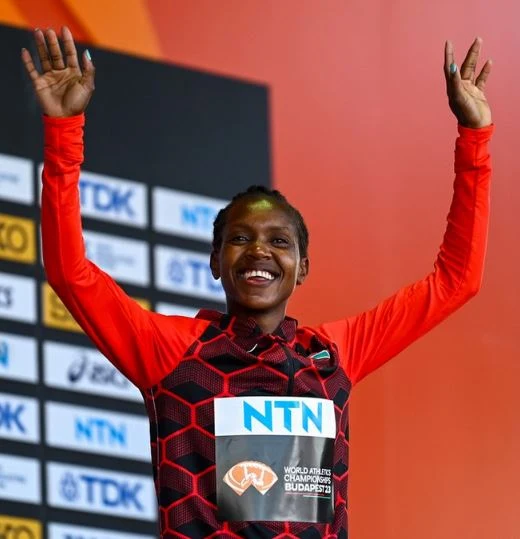
Fatuma Zarika is a Kenyan professional boxer who became the first Kenyan to win a World Boxing Council title. She defeated Alicia Ashley for the women's super-bantamweight championship in October 2016 and held the title until 2019. Her achievement widened the international account of Kenyan sport beyond the track and brought greater attention to women competing in a demanding professional boxing circuit.
Born in Nairobi in 1985 and also known as Zarika Njeri, she developed her career through local gyms and a succession of professional contests. A biography published by the Women's Boxing Archive Network draws on her team's account and archived fight reports to describe those early stages. The record places training and competition within the economic pressures of earning a living and supporting a family.
Some accounts give inconsistent dates for the beginning of her training and professional career. This profile does not combine those dates into a misleadingly precise timeline. The documented contests and championship history provide a firmer basis for describing her sporting development. They show a career built over years rather than a sudden appearance at world-title level.
The victory over Ashley in 2016 was a defining result. A professional championship is not simply a prize attached to a single performance: holding it leads to the obligation to face further challengers. Zarika's subsequent defences included contests with Catherine Phiri and Yamileth Mercado. Those bouts brought championship boxing before Kenyan audiences as well as taking her abroad.
In 2019, she again defeated Phiri in Nairobi before losing the title to Mercado in Mexico later that year. The sequence records both successful defence and the competitive uncertainty that remains part of a champion's career. Remembering a boxer accurately includes defeats as well as victories. They are part of the record through which the achievement of reaching and remaining at that level can be understood.
Her career has often been presented through a story of persistence under difficult circumstances. That interpretation should remain connected with the practical work of the sport: repeated training, preparation for a particular opponent, travel and the management of a professional career. An inspirational description can otherwise conceal the skill and labour on which the public result depends.
Zarika's visibility also matters within Kenyan women's sport. A world-title contest creates an occasion on which audiences and institutions must take a female professional athlete seriously on the terms of her own discipline. The significance is not that women require an exceptional individual to prove their right to participate, but that a recognised career can help make their existing work harder to overlook.
Her place in the archive recognises a documented championship achievement and the longer career that made it possible. It also provides a route into the history of Kenyan boxing gyms, trainers, opponents and supporters. The national sporting story includes the ring, with its own techniques, risks and measures of excellence, alongside the events in which Kenya has more routinely received international attention.
Her family responsibilities continued alongside that career, which she has discussed as a mother of two daughters.
Add to this story