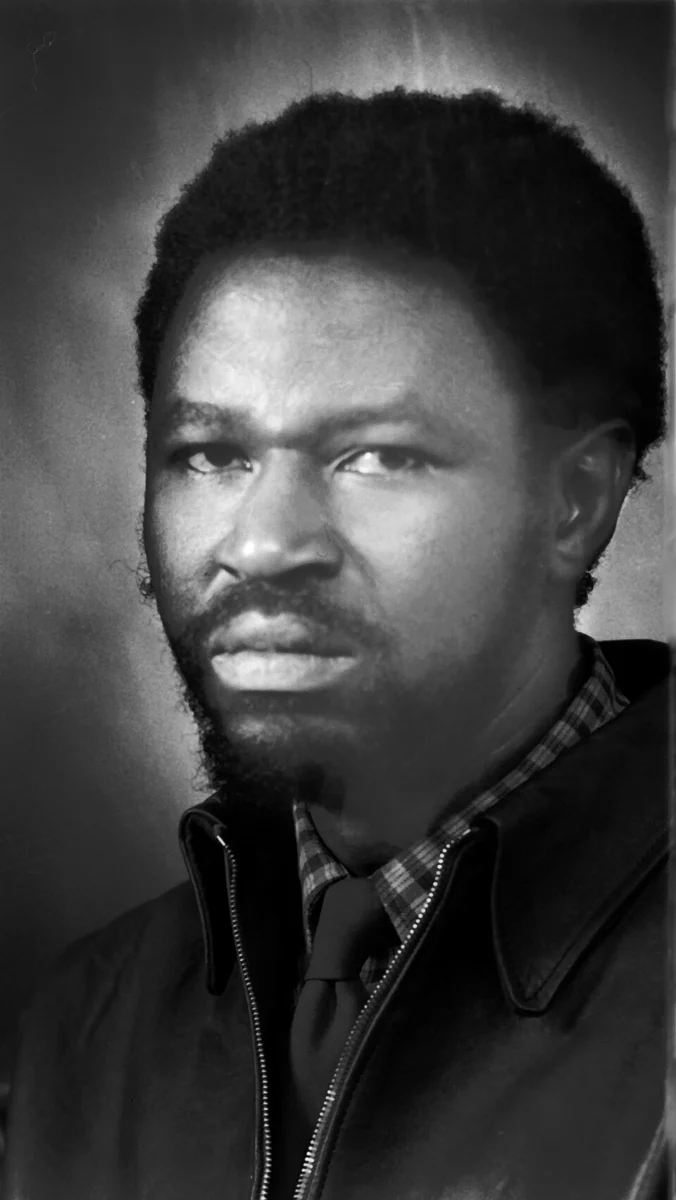
Amarjit chandan Archive / CC BY-SA 4.0. Resized for the archive. Image credits.

Fred Kubai
Trade unionist and independence activist
He organised workers into the movement for freedom.
- Theme
- Liberation
Fred Kubai helped build trade-union organisation during the colonial period and became a prominent figure in the independence movement. He was among the Kapenguria Six, arrested and prosecuted during the emergency.
His contribution places workers and their organisations within the history of liberation. The campaign for independence drew strength from the workplace as well as the political meeting, linking material conditions with demands for self-government.
Life and work
Fred Kubai (1917 – June 1, 1996) was one of the Kapenguria Six, members of the Kenya African Union arrested in 1952, tried and imprisoned.
He was a Kikuyu, and a leader of the Kenya Transport Workers Union and the East African Trade Union Congress. Kubai organized attacks against the European government in Nairobi. In May 1950, he was tried and acquitted of the assassination attempt of a city official. On 22 October 1952, Fred Kubai, together with Bildad Kaggia, Kung'u Karumba, Jomo Kenyatta, Paul Ngei, and Achieng Oneko, was charged with organizing the Mau Mau Uprising.
Fred Kubai was born in 1917 in Nairobi, Kenya. He attended Buxton High School located in Mombasa, graduating in 1931. Fred Kubai had four wives and after separating with his wives fell in love with his house help Christina Gakuhi. In 1991, he wrote a will that saw Christina Gakuhi entitled to all of his properties. He then worked for the East African Post and Telecommunications as a telegraphist from 1931 to 1946. During World War II, he also served as part of the telegraph battalion in the British Army in Lodwar.
In 1946, Kubai ended his telegraphist career and joined the African Workers Federation. The following year, he formed the Kenya African Road Transport and Mechanics Union, which later came to be known as the Transport and Allied Worker Union.
On 22 October 1952, Bildad Kaggia, Kung'u Karumba, Jomo Kenyatta, Fred Kubai, Paul Ngei, and Achieng Oneko were charged with organizing the Mau Mau Uprising. They were found guilty and sentenced to ten years in prison.
The connection between trade unionism and nationalism is essential to Kubai's biography. Workers confronting conditions in a colonial economy were also confronting a political system that determined whose interests counted. A union could provide an organisation, an audience and experience in collective action. Those resources mattered to a wider independence movement.
The Kapenguria prosecution placed Kubai within the best-known group of imprisoned nationalist leaders, but it should not eclipse that organising background. The history of liberation was made through workplaces and associations as well as through the men put on trial. His career helps connect the symbolic memory of the Kapenguria Six to the everyday effort required to mobilise workers. It also invites readers to ask how the promise of political freedom related to expectations about wages, material security and the treatment of labour after independence.
It is through this connection between the political and the material that his contribution remains distinct. Freedom meant the possibility of governing a country, and also the expectation that its working people would be treated differently.
This section adapts selected passages from Fred Kubai by Wikipedia contributors. It is shared under CC BY-SA 4.0. Selected and edited passages, with additional editorial context; lists and reference markers omitted; punctuation and paragraph breaks adjusted. Photographs have separate licences.
More from Liberation
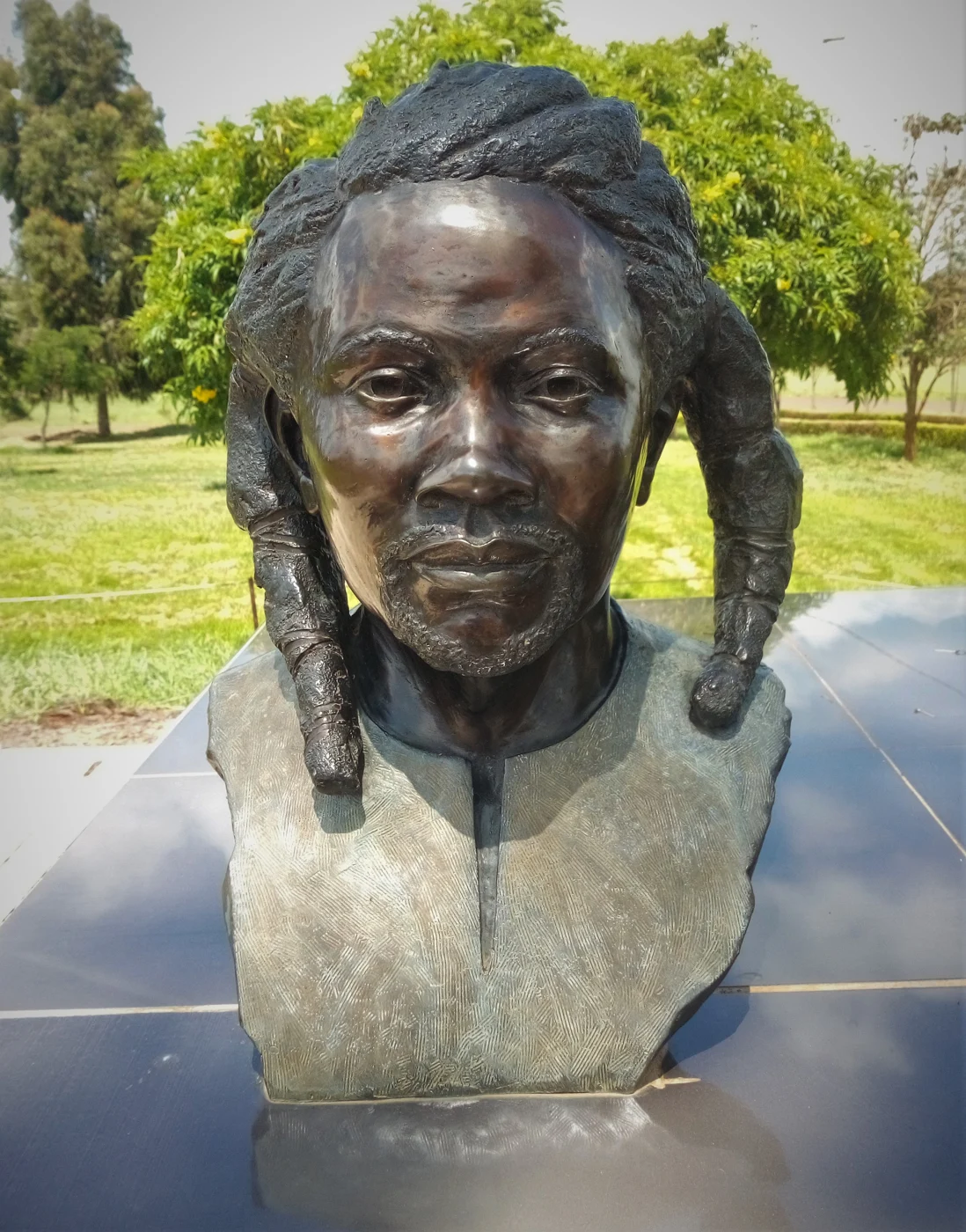
Dedan Kimathi
Field Marshal of the Mau Mau
c. 1920 – 1957 · Memorial bust
Mekatilili wa Menza
Leader of the Giriama resistance
fl. 1910s
A woman who raised a people against the empire with a dance and an oath.
Muthoni Kirima
Mau Mau Field Marshal
1930 – 2023
A woman who became a field marshal in the struggle for independence.