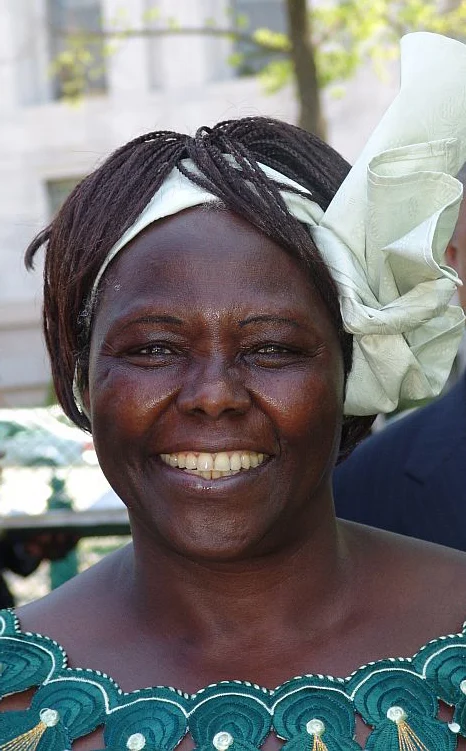
George Anyona
Political rights campaigner
He challenged a system that punished political dissent.
- Theme
- Conscience
George Anyona became known for opposing authoritarian government and for the political imprisonment that followed his activism. Amnesty International documented his case among concerns about the treatment of government critics in Kenya.
His experience forms part of the history of the struggle for open political competition. It also records the pressure placed on families, lawyers and supporters when the state used detention and prosecution against its opponents.
Life and work
Despite being born to peasant parents, Anyona rose to prominence in the Kenyan political landscape to be thrice elected to the Kenyan Parliament representing the people of Kitutu East (later renamed Kitutu Masaba) constituency. He shared an ideological viewpoint and was a close political confidant of the first vice-president of Kenya, Jaramogi Oginga Odinga. Anyona's name remains dominant among Kenya's political personalities because he is perceived by a large section of Kenyans as a brave man, who was strong enough to challenge the Kenya African National Union (KANU) government at a time when it was almost suicidal to do so. He forged a reputation as a principled politician who championed free expression of thought, democracy and a just and equal society. He lived a modest life, never seeking to enrich himself from the offices he held and abhorred the culture of corruption and worship of money that prevailed in the country.
He attended Tombe Primary School from 1952 to 1954 and Sengera Intermediate School from 1955 to 1958 before proceeding to the prestigious Alliance High School where he schooled from 1959 to 1964 and served as Deputy School Captain. From Alliance, he proceeded to Makerere University, Uganda where he studied Political Science, English, Economics and History between 1965 and 1968, graduating with Bachelor of Arts (Hons) and serving as President of the Kenya Makerere Students Union in 1967. Upon returning from Uganda, Anyona worked as an Assistant Secretary in the Office of the President between 1968 and 1970, as the Secretary General of the Kenya Red Cross Society in 1970 and as Nairobi Airport Manager then District Sales Manager for British Overseas Airways Corporation (BOAC) later renamed British Airways in Nairobi from 1970 to 1974.
In 1974, he contested and won the then Kitutu East Parliamentary seat. He quickly established a reputation as a fearless firebrand and for thorough research before presenting issues in parliament, coming to be referred to as a 'one-man backbench' after parliament was neutered following the murder of JM Kariuki and the detention of then Deputy Speaker and Tinderet MP Jean Marie Seroney and Butere MP Martin Shikuku. Anyona's political troubles began in 1977 when he was arrested within the precincts of parliament (an illegality in itself) for questioning the award of a tender for the supply of wagons to the then East African Railways and Harbours Corporation and detained without trial at Manyani Prison by then President Jomo Kenyatta. He was released a year later by President Daniel arap Moi soon after he assumed power following the death of President Kenyatta. His attempts to resume representative politics were thwarted when he was barred from contesting his old parliamentary seat in the 1979 General Elections and from contesting trade union elections as a candidate for the post of Secretary General of the Transport and Allied Workers Union in 1980.
Anyona would again be arrested in 1981 and charged with sedition but the charges were eventually withdrawn by the state. In 1982, this time with his longtime friend and veteran politician Jaramogi Oginga Odinga and several others, he attempted to form a political party Kenya African Socialist Alliance (KASA) to challenge the ruling party KANU. He was arrested on the way to the Intercontinental Hotel Nairobi to hold a press conference to announce the formation of the party and was detained without trial on 2 June 1982 and incarcerated at Kamiti and Shimo La Tewa Prisons; Jaramogi was later placed under house arrest in August 1982. Anyona was also expelled from the ruling party KANU. Shortly after Anyona was detained, his lawyer John Khaminwa was also detained without trial and a crackdown followed that targeted university lecturers, student leaders, politicians, lawyers and journalists. KANU, sensing the danger the two politicians had posed, immediately sought to change the constitution. The result was the passing of a constitutional amendment making Kenya a de facto one-party state the same year.
This section adapts selected passages from George Anyona by Wikipedia contributors. It is shared under CC BY-SA 4.0. Selected passages; pronunciation guides, lists and reference markers omitted; punctuation and paragraph breaks adjusted. Photographs have separate licences.