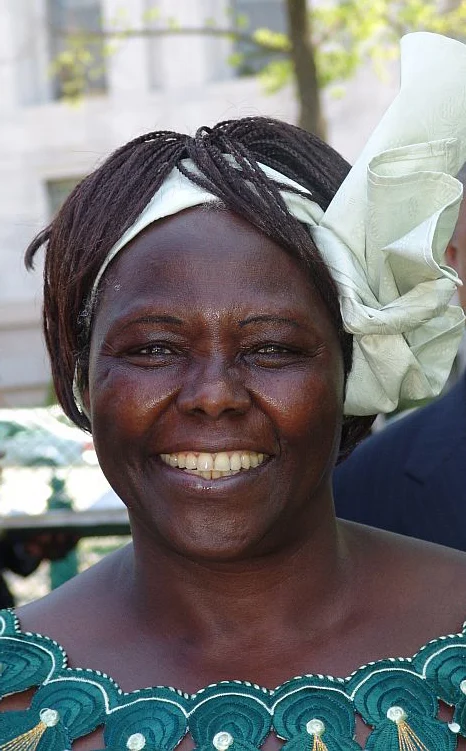
Koigi wa Wamwere
Writer and human rights campaigner
He made political imprisonment a matter of public record.
- Theme
- Conscience
Koigi wa Wamwere opposed authoritarian rule through activism, political organising and writing. He experienced detention, exile and prosecution, and his treatment drew international human-rights attention.
His work connects personal testimony with the wider campaign for democratic freedoms. Accounts of his life show how resistance continued through books, legal challenges and solidarity networks when ordinary political participation was constrained.
Life and work
Koigi wa Wamwere (born 24 December 1950) is a Kenyan politician and human rights activist who served as a Member of the National Assembly for Subukia Constituency from 1979 to 1982 and from 2002 to 2007. Koigi became famous for opposing both the Jomo Kenyatta and Daniel arap Moi regimes, both of whom sent him to detention.
Koigi's father Wamwere, hailed from Kiambu District. However, in 1915, the British colonial government declared that all land in Kenya belong to the settlers. As a result, several Kikuyu people had their land taken away. Koigi's father (then aged 4) and his family were among the evicted and had to move to Rift Valley Province, an area traditionally inhabited by Maasai people. Koigi's mother Wangu, escaped a forced marriage and ended up in Rift Valley, only to be forcefully married with his father. They had nine children, Koigi being the oldest. Koigi's father worked for the colonial forest department.
Koigi was born in 1949 in Rugongo location, Bahati division, Nakuru District, Rift Valley Province. He went to Rugongo Primary School Koigi Wamwere went to Mother of Apostles seminary and later Nyeri High School. Wamwere excelled in school and received a scholarship to Cornell University in the United States in the early 1970s, first becoming interested in politics during his studies there.
Without finishing studies in Hotel Management at Cornell University, Wamwere went back to Kenya. He began lecturing at the Jogoo Commercial College and also was a freelance journalist for the now-defunct Sunday Post newspaper.
He ran for the Nakuru North Constituency (now Subukia Constituency) parliamentary seat in 1974, representing KANU, the only legal political party then. The young Wamwere was defeated by seasoned Kihika Kimani, though only by 800 votes. He wrote an article that was critical of Jomo Kenyatta in the Sunday Post, and was subsequently detained in 1975 and held in prison for three years. In December 1978, after Kenyatta had died, the new president Daniel arap Moi released Wamwere together with Ngugi wa Thiong’o and Martin Shikuku.
He was elected to the parliament in 1979 by winning the Nakuru North Constituency, this time defeating the incumbent MP Kihika Kimani. He teamed up with other radical and socialist politicians who were derogatorily named The Seven Bearded Sisters by Charles Njonjo. Others were Abuya Abuya, James Orengo, Chelagat Mutai, Chibule wa Tsuma, Mwashengu wa Mwachofi and Lawrence Sifuna.
Wamwere was one of the several opposition figures detained by president Moi after the 1982 Kenyan coup attempt, though he maintains that he was not involved in the coup. Consequently, he lost his parliamentary seat, which was won by Francis Kimosop at the 1982 by-election. Kimosop committed suicide in 1986 and Wamwere, who had been released from prison in 1984, contested the newly vacated seat in the 1986 by-election. The election was controversially won by Eric Bomett, brother-in-law of president Moi. Soon afterward Wamwere fled to Norway, fearing for his life. International human rights non-governmental organisation Amnesty International also declared Koigi as a prisoner of conscience in 1984.
In 1990 he visited Uganda, but he was kidnapped by Kenyan security officials in Kampala. He was charged with treason, and held at the Kamiti Maximum Security Prison. After being released in 1993, he again fled to Norway. He returned to Kenya in 1995, but was detained again and charged with robbery with violence, facing the death penalty. After a trial that attracted worldwide attention, he was sentenced for four years in prison and six lashes by cane. He was released on 13 December 1996 due to health issues after international condemnation and protests by activists led by Koigi's mother.
This section adapts selected passages from Koigi wa Wamwere by Wikipedia contributors. It is shared under CC BY-SA 4.0. Selected passages; pronunciation guides, lists and reference markers omitted; punctuation and paragraph breaks adjusted. Photographs have separate licences.