Gitu wa Kahengeri
Mau Mau veteran and advocate
He helped veterans bring an unfinished history into public view.
- Theme
- Liberation
Gitu wa Kahengeri became one of the most persistent public representatives of people who had suffered during the Mau Mau emergency. His contribution spans participation in the independence struggle and the much later work of asking that survivors be heard. The transfer of power in 1963 did not by itself resolve the injuries, losses and questions of recognition left by colonial detention. Kahengeri helped keep those questions before both Kenyan and British institutions.
His oral-history account, recorded by the Museum of British Colonialism, describes his support for the Mau Mau movement in the 1950s and his arrest alongside his father. He was taken to Athi River and later to Takwa on Manda Island. The museum records seven years of detention and forced labour. These are the experiences behind his later advocacy: he spoke as someone whose own life had been interrupted by the system he wanted acknowledged.
In later decades, Kahengeri held a leading role in the Mau Mau War Veterans Association. That work involved representing a generation whose members were ageing while recognition and redress remained unsettled. Public testimony, meetings and the organisation of survivors were necessary parts of a campaign whose visible legal milestones depended on years of less visible effort. His public role should be distinguished from that of the individual claimants whose experiences were examined in the British litigation.
In June 2013, the British government announced a settlement concerning claims of torture and other abuse during the emergency. Its statement recognised that Kenyans had suffered ill-treatment under the colonial administration, and set out compensation and support for a memorial. The settlement was an important event in the veterans' campaign, but it was not a complete resolution of every historical grievance. The scope of an agreement and the wider meaning people attach to justice are different things.
Kahengeri also participated in the work of public remembrance. A monument and the names attached to a public place can make a history harder to ignore, but they cannot substitute for the people whose testimony gives it substance. His advocacy linked these forms of recognition with questions about survivors' material circumstances. The campaign was concerned with how veterans lived as well as with how the nation described them.
Kenya News Agency reported the launch of his memoir, The Betrayal of Mau Mau Freedom Fighters, during the Jamhuri Day celebrations in Kiambu in 2023. In that account he continued to ask for justice and to challenge public leaders about their responsibilities. The memoir adds a survivor's own narrative to a history frequently presented through administrative files, military accounts or the careers of later politicians.
Accounts of his birth year differ, so this profile does not turn a disputed age into a settled fact. The uncertainty does not diminish the documented record of detention and advocacy. It is a reminder that an archive must distinguish what is known from the details repeated in tribute.
Kahengeri's life makes clear why liberation history continues after independence. It remains present in testimony, legal claims, public monuments and arguments about responsibility. His contribution was to insist that the people who endured that history could speak within those arguments for themselves.
Add to this storyMore from Liberation
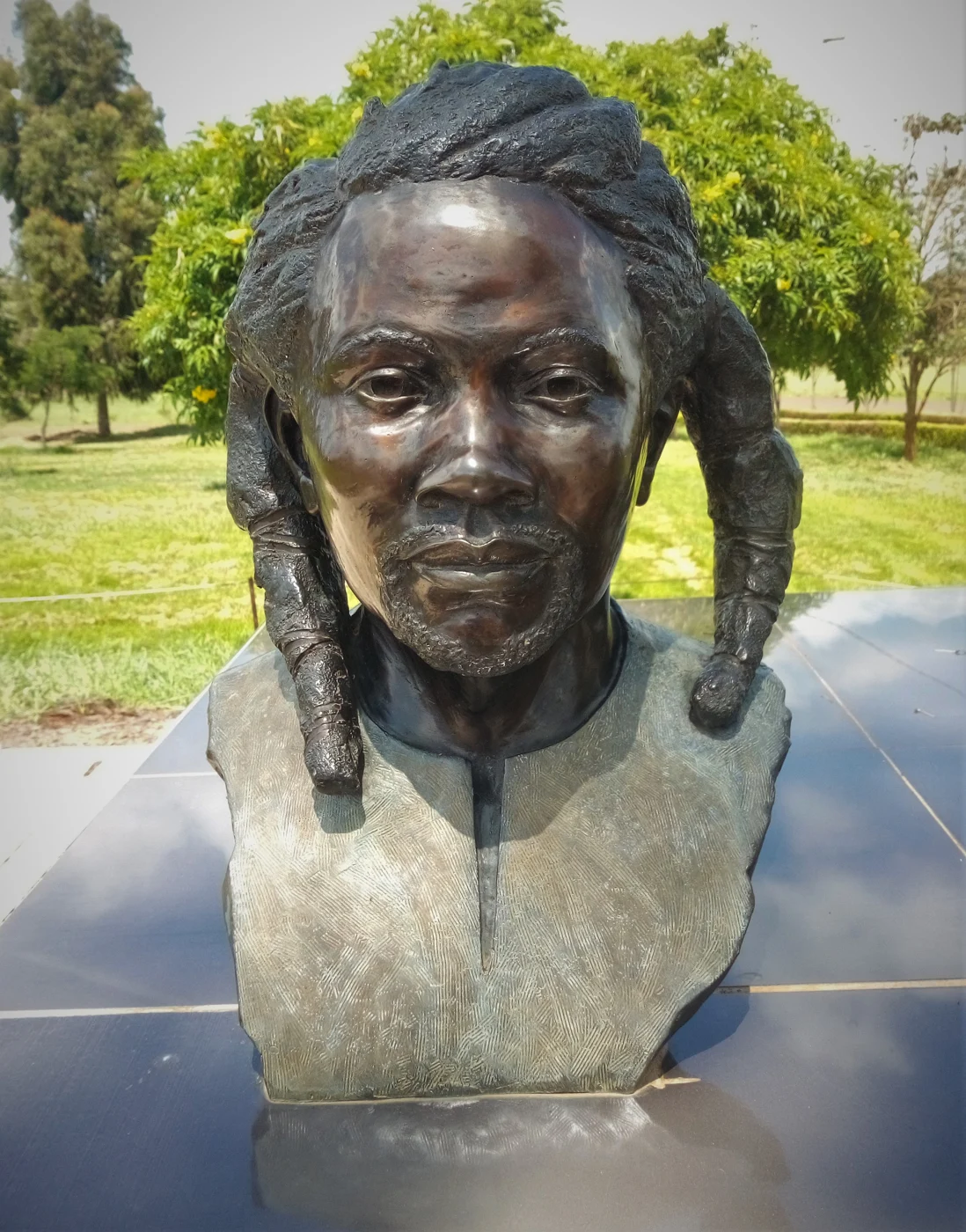
Dedan Kimathi
Field Marshal of the Mau Mau
c. 1920 – 1957 · Memorial bust
Mekatilili wa Menza
Leader of the Giriama resistance
fl. 1910s
A woman who raised a people against the empire with a dance and an oath.
Muthoni Kirima
Mau Mau Field Marshal
1930 – 2023
A woman who became a field marshal in the struggle for independence.