Muindi Mbingu
Anti-colonial organiser
A protest over cattle became a challenge to colonial power.
- Theme
- Liberation
Samuel Muindi Mbingu became a central organiser of the Akamba campaign against compulsory livestock destocking in 1938. His contribution connects resistance to colonial government with the material circumstances of rural households. Cattle were a source of food, income, security and social wealth. A policy that removed them could not be understood only as an administrative decision about numbers of animals.
The campaign developed within a wider history of land pressure in Ukambani. Colonial land alienation and restrictions on African settlement affected where people could live and graze livestock. The Kenya Human Rights Commission's historical research places the cattle dispute within that larger relationship between land, livelihood and state power. Taking animals from households while reducing access to land made the consequences of colonial rule immediate and visible.
Mbingu helped organise protest through the Ukamba Members Association. The campaign included petitioning and a march to Nairobi, where participants demanded an audience with the governor. Kenya News Agency's account describes people travelling from Ngelani and Komarock and remaining in the capital to press their demand. The protest brought a rural grievance into the centre of the colonial administration.
The organisation of such a campaign required more than a single public speech. People had to share information, agree on a course of action and sustain a collective presence away from home. The participation of women and families also made clear that livestock policy affected a community's daily life, rather than a narrow group of political activists. The movement's force came from those shared circumstances.
The historical record includes communication with nationalist organisations and writing intended for Muigwithania. A document discussed in the Kenya Human Rights Commission's colonial-abuses report connects the demand over livestock with the loss of land. That connection is important to understanding Mbingu's position. A dispute framed by officials as a grazing problem could also be understood by the people affected as a consequence of dispossession.
The campaign challenged compulsory destocking and made Mbingu a lasting figure in Akamba resistance history. Colonial punishment of its organisers demonstrates the political importance attached to a mobilisation that began with cattle. The state's response treated collective opposition to an economic policy as a challenge to authority. The distinction between an economic grievance and a political struggle was therefore difficult to sustain.
Later remembrance has included the Muindi Mbingu Memorial Association and efforts by the Ngelani community to preserve the history of the protest. The Constitution and Reform Education Consortium's published account records this continuing work. It gives the campaign a life beyond the familiar presence of his name on a Nairobi street, reconnecting the name with the people and circumstances behind it.
Mbingu's contribution broadens the geography and methods of Kenya's liberation story. It belongs alongside armed resistance, labour organising and formal nationalist politics, while remaining distinct from each. Rural people could mobilise around a threat to their livelihoods and turn that threat into a demand for accountability.
His place in the archive recognises that political freedom is connected with control over the conditions of ordinary life. The campaign of 1938 made that connection through a specific grievance and a collective action. Remembering him keeps the land and livestock economy within the history of a country's struggle to govern itself.
Add to this storyMore from Liberation
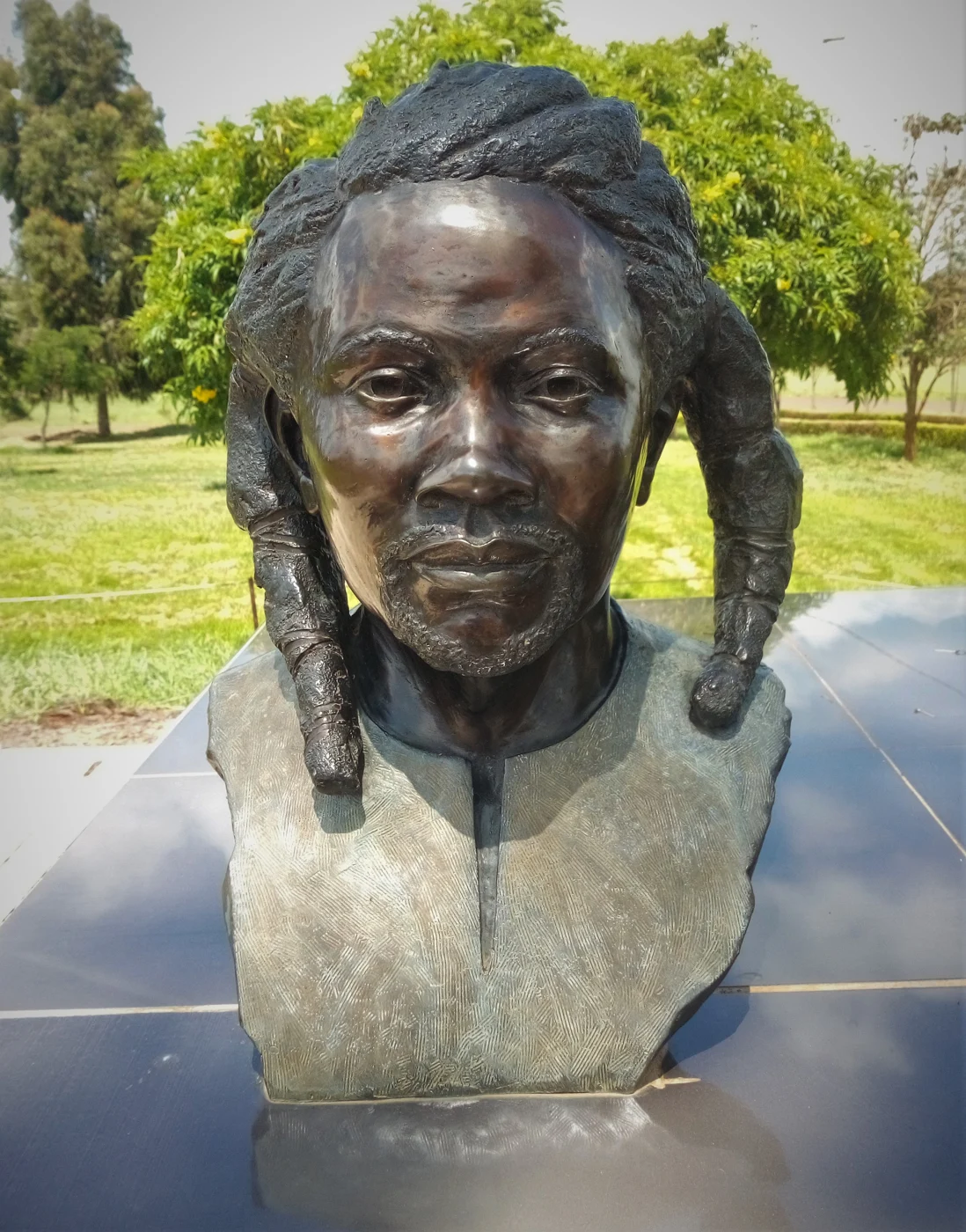
Dedan Kimathi
Field Marshal of the Mau Mau
c. 1920 – 1957 · Memorial bust
Mekatilili wa Menza
Leader of the Giriama resistance
fl. 1910s
A woman who raised a people against the empire with a dance and an oath.
Muthoni Kirima
Mau Mau Field Marshal
1930 – 2023
A woman who became a field marshal in the struggle for independence.