Mukami Kimathi
Liberation activist and keeper of memory
She kept the struggle's human cost in the national conversation.
- Theme
- Liberation
Mukami Kimathi's life belongs to the history of Kenya's liberation struggle in its own right. She was the wife of Dedan Kimathi, but that relationship does not adequately describe her contribution or the hardship she endured. Her experience brings into view the women, children and families whose lives were transformed by the emergency, and whose work is easily lost in a history told mainly through military commanders and political officeholders.
She and Dedan Kimathi built a family while the movement against colonial rule developed around them. Accounts gathered in Wairimu Nderitu's biography describe the relationship within a much larger story of political commitment, separation and survival. These personal circumstances matter because the struggle was not conducted by people temporarily removed from ordinary life. Marriage, children, work and the need to find food continued within it, under conditions in which the colonial state could punish a household for its connections.
Mukami experienced arrest and imprisonment during the emergency. Her detention at Kamiti is part of the documented account of her life. Dedan Kimathi was executed in February 1957, leaving his family to live with both bereavement and the continuing consequences of his role in the movement. The story of his capture and execution should not eclipse the years that followed for the people closest to him.
Women's contributions to the struggle took different forms. A person could provide support, sustain a household, carry information or endure detention without holding a military rank. Later tributes sometimes compress these distinctions into a single image of a forest fighter. A careful account of Mukami's life recognises participation and sacrifice without assigning her an unsupported military career. The distinction gives greater precision to the history rather than diminishing it.
After independence, she became an important presence in the public memory of the Mau Mau struggle. Her testimony and advocacy kept attention on veterans, the Kimathi family and the unfinished business of recognition. The continuing uncertainty over Dedan Kimathi's burial place was part of that wider history of loss. National commemoration did not automatically provide a private family with the answers it sought.
Nderitu's book, Mukami Kimathi: Mau Mau Woman Freedom Fighter, is a substantial source for understanding her experience. It gives readers a route beyond the brief descriptions attached to anniversaries and official ceremonies. The existence of a biography centred on her also matters in itself: it makes a woman's account part of the written record of independence, rather than leaving her visible only when another person's story requires her presence.
Mukami died in Nairobi on 4 May 2023. The public response recognised both her connection to Dedan Kimathi and her own place in the history of resistance. Later discussions of her life have also asked how political institutions claim the memory of the struggle, and whether the celebration of heroes adequately reflects the circumstances of survivors.
Her contribution asks readers to hold those questions together. The archive remembers the participation, detention, loss and later testimony that can be supported by sources. It also recognises that a nation's freedom was sustained through forms of work and endurance that rarely appear in the familiar image of a commander carrying a weapon.
Add to this storyMore from Liberation
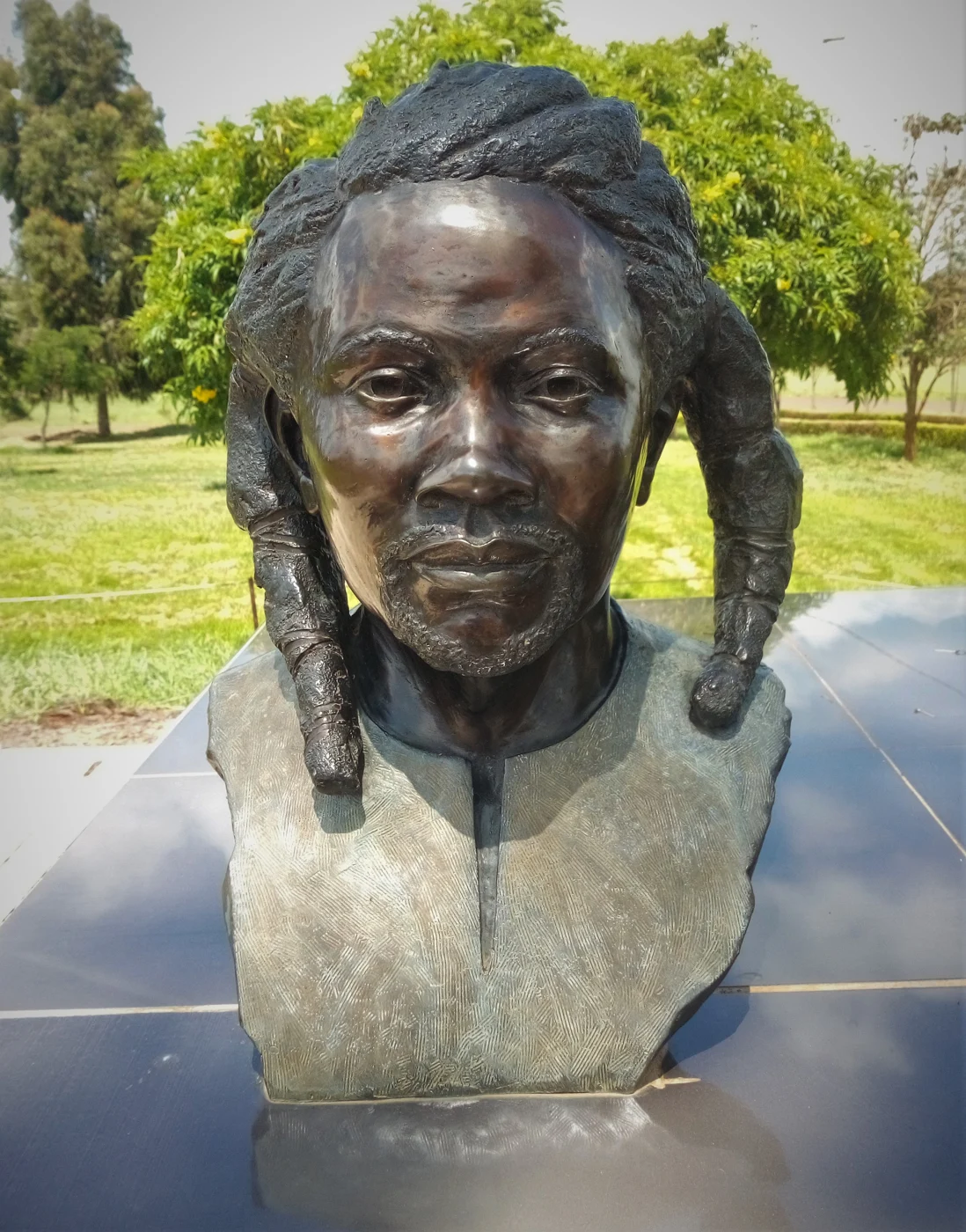
Dedan Kimathi
Field Marshal of the Mau Mau
c. 1920 – 1957 · Memorial bust
Mekatilili wa Menza
Leader of the Giriama resistance
fl. 1910s
A woman who raised a people against the empire with a dance and an oath.
Muthoni Kirima
Mau Mau Field Marshal
1930 – 2023
A woman who became a field marshal in the struggle for independence.