Musa Mwariama
Mau Mau commander
He carried the independence struggle through the Meru forests.
- Theme
- Liberation
Musa Mwariama was a commander of Mau Mau forces in the Meru region. His role broadens a history often told mainly through the Aberdares and the central highlands, showing the reach and regional character of armed resistance.
He is remembered as one of the fighters who survived the forest campaign and lived to see independence. His story belongs alongside those of the communities that supplied, sheltered and sustained the movement.
Life and work
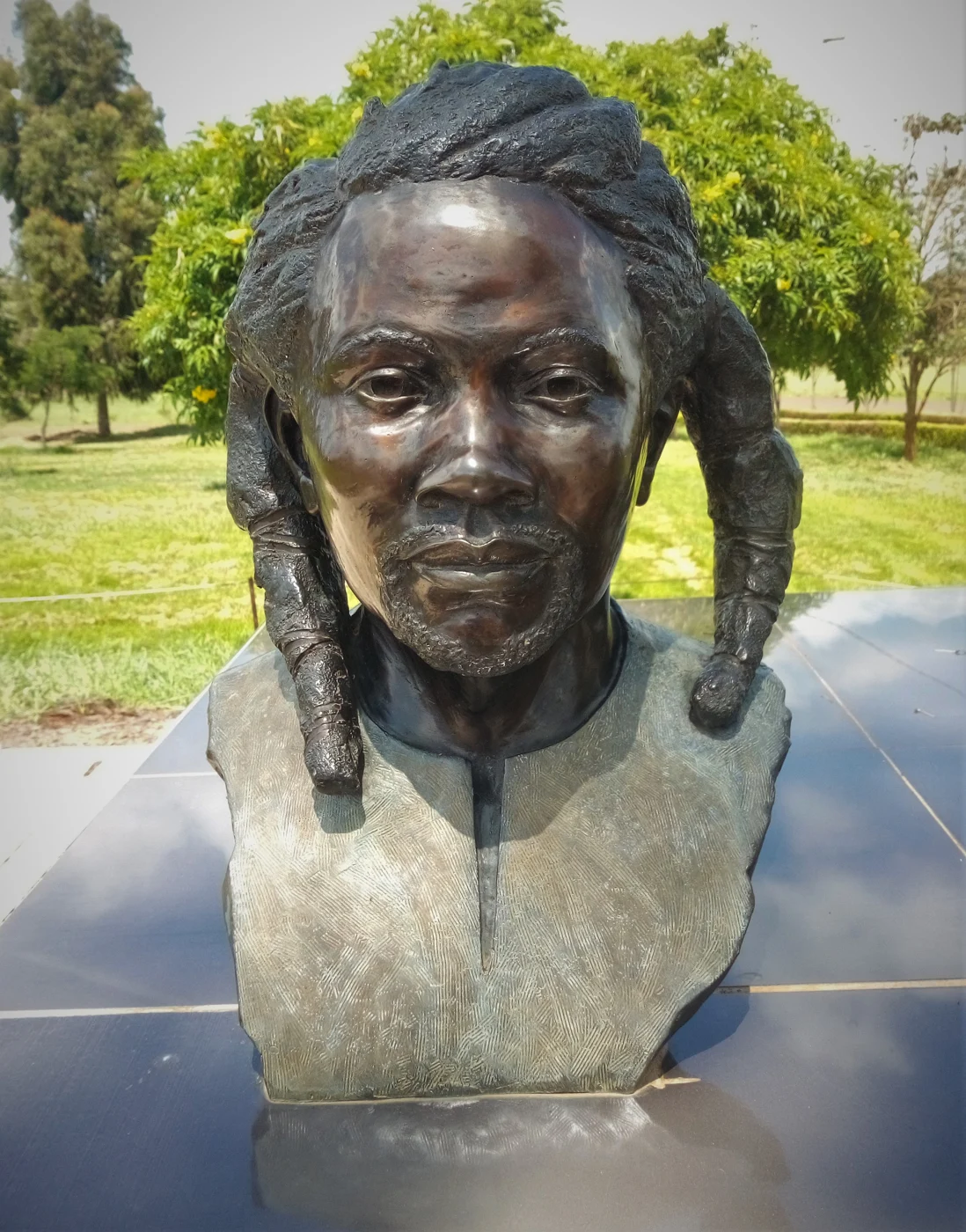
Musa Mwariama (1928–1993) was a Kenyan revolutionary leader of the Mau Mau in Meru and the highest-ranking Mau Mau leader who survived the war without being captured. Together with Field Marshal Dedan Kimathi, they comprised the core Mau Mau leadership. Mwariama was the highest ranking leader among the Meru side of the uprising.
By the time he left his bases in Mount Kenya and Nyambene Hills on the equator, he had about 2,000 fighters who had survived Operation Anvil in Kenya. He was decorated with the national Order of Elder of the Burning Spear (EBS) after independence. The most famous photograph of him is with President Jomo Kenyatta on attainment of Uhuru (independence) in 1963, and most of the post-war Mau Mau video clips show him inspecting a Mau Mau guard of honour or with President Jomo Kenyatta.
Baringo or M'Kirigua M'Muchiri, alias Musa Mwariama, later known as Field Marshal Mwariama, was born in 1928 at Muthara in Tigania division of Meru County.
According to Ameru tradition, his parents who had migrated from Nkuene in South Imenti, gave him the name Baringo. After his circumcision in 1942, and according to Meru tradition, his name had to be changed, and he was renamed M'Kirigua. He had an older brother called Romano Ntabathia though from a different mother. Their father, M'Muchiri was a soothsayer and strict traditionalist.
Mwariama's career also helps explain why the end of an armed conflict and the achievement of independence are different moments in a country's history. Fighters emerging from the forests had to find a place in a new political order. Recognition of military leadership did not automatically settle the questions of land, livelihood and belonging that had brought people into the struggle.
Mwariama's position in Meru also matters to the way the movement is remembered. The forest campaign was sustained through particular landscapes, networks and forms of local knowledge. Accounts concentrated only on one region or commander can obscure that diversity. His career restores one of those regional centres to the national story.
The honours he received after independence recorded a public recognition of that service. They are distinct from the question of how former fighters and their families lived in the decades after the emergency. Both belong in an account of liberation: the acknowledgement of a contribution and the material circumstances of the people who made it.
Remembering Mwariama alongside other commanders helps readers see the movement as an organisation made by many people. Its history includes leadership in different regions and the communities whose support made survival possible. That collective setting gives his individual contribution its significance.
This section adapts selected passages from Musa Mwariama by Wikipedia contributors. It is shared under CC BY-SA 4.0. Selected and edited passages, with additional editorial context; lists and reference markers omitted; punctuation and paragraph breaks adjusted. Photographs have separate licences.
More from Liberation
Dedan Kimathi
Field Marshal of the Mau Mau
c. 1920 – 1957 · Memorial bust
Mekatilili wa Menza
Leader of the Giriama resistance
fl. 1910s
A woman who raised a people against the empire with a dance and an oath.
Muthoni Kirima
Mau Mau Field Marshal
1930 – 2023
A woman who became a field marshal in the struggle for independence.