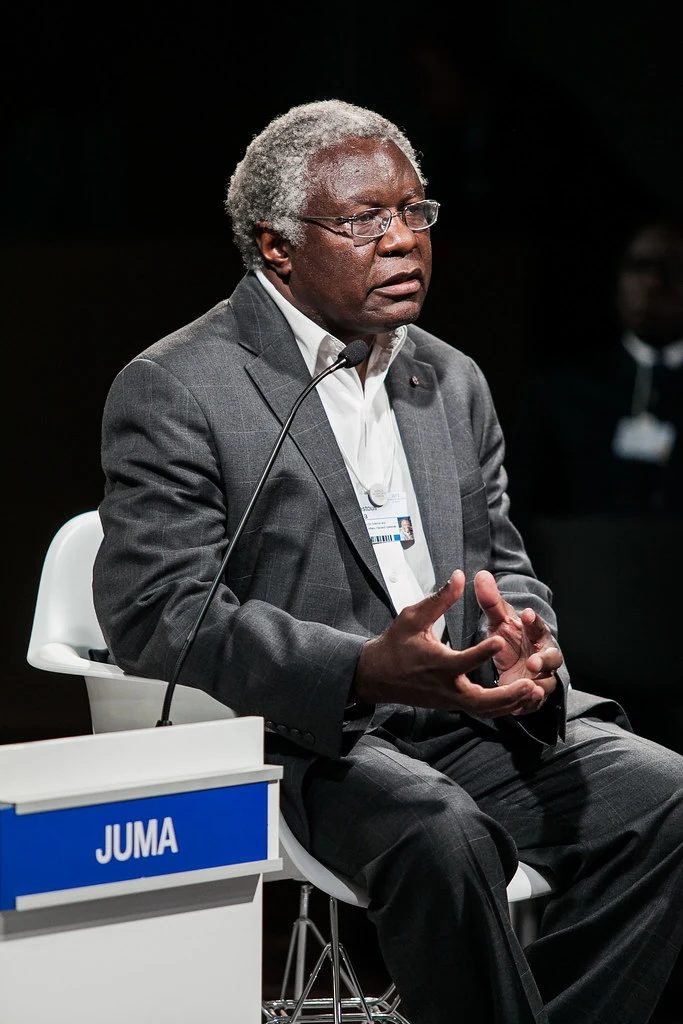
https://www.flickr.com/photos/dci/ / CC BY-SA 2.0. Resized for the archive. Image credits.
Ory Okolloh
Civic technology co-founder and public-interest advocate
She helped turn citizen reports into a shared public record.
- Theme
- Science & Innovation
Ory Okolloh was a co-founder of Ushahidi, which emerged during Kenya's 2007-2008 post-election violence. The platform brought together reports from the public and made them visible on a map.
Her work helped establish an influential example of African civic technology. It showed how people outside formal institutions could contribute information during a crisis, while prompting continuing questions about verification, access and responsible use.
Life and work
Ory Okolloh (or Ory Okolloh Mwangi) is a Kenyan activist, lawyer, and blogger. She is a partner at Verod-Kepple Africa Ventures, a pan-African investment firm based in Lagos, Nigeria, with offices in Nairobi.
She previously served as the managing director at Omidyar Network, and as the policy manager for Africa with Google. Ory was named 100 most influential People in 2014..
Okolloh earned a Bachelor of Arts in Political Science, summa cum laude, from the University of Pittsburgh. She graduated from Harvard Law School in 2005 with a Juris Doctor. After graduation, she turned down a job offer from a D.C. law firm to return to Kenya to work on government accountability.
In 2006, Okolloh co-founded the parliamentary watchdog site Mzalendo . The site sought to increase government accountability by systematically recording bills, speeches, MPs, and standing orders.
When Kenya was engulfed in violence following a disputed presidential election in 2007, Okolloh co-created Ushahidi , a website and tool that collected and recorded eyewitness reports of violence using text messages and Google Maps. The technology has since been adapted for expanded purposes (including monitoring elections and tracking pharmaceutical availability) and used in a number of other countries.
She has worked as a legal consultant for NGOs and has worked at Covington and Burling, the Kenya National Commission on Human Rights, and the World Bank.
Okolloh was appointed to the board of Thomson Reuters Founders Share Company, the body that acts as a guardian of the Thomson Reuters Trust Principles in May 2015. She retired from the company in December 2024, having served as the deputy chair in her last year.
Okolloh has also served as an independent director at Safaricom since February 2023. She departed from the position in July 2024. She previously served on the board of Stanbic Bank Foundation Kenya, from April 2020 to July 2024, and as a non-executive director of Stanbic Bank until December 2020, when she resigned.
Mzalendo and Ushahidi addressed different gaps in public information. One concerned the routine work of elected representatives; the other emerged from an immediate crisis in which people needed to make events visible. Together they show why Okolloh's contribution cannot be reduced to a single app or moment. Her legal education, blogging and organising helped connect information with a public purpose. In both cases, the central question was who could observe institutions and events, contribute a record, and use that record to demand an answer. These questions remain relevant even as the technology used to address them changes.
Her work also illustrates the importance of institutions that retain public information after an immediate controversy or emergency has passed.
This section adapts selected passages from Ory Okolloh by Wikipedia contributors. It is shared under CC BY-SA 4.0. Selected and edited passages, with additional editorial context; lists and reference markers omitted; punctuation and paragraph breaks adjusted. Photographs have separate licences.