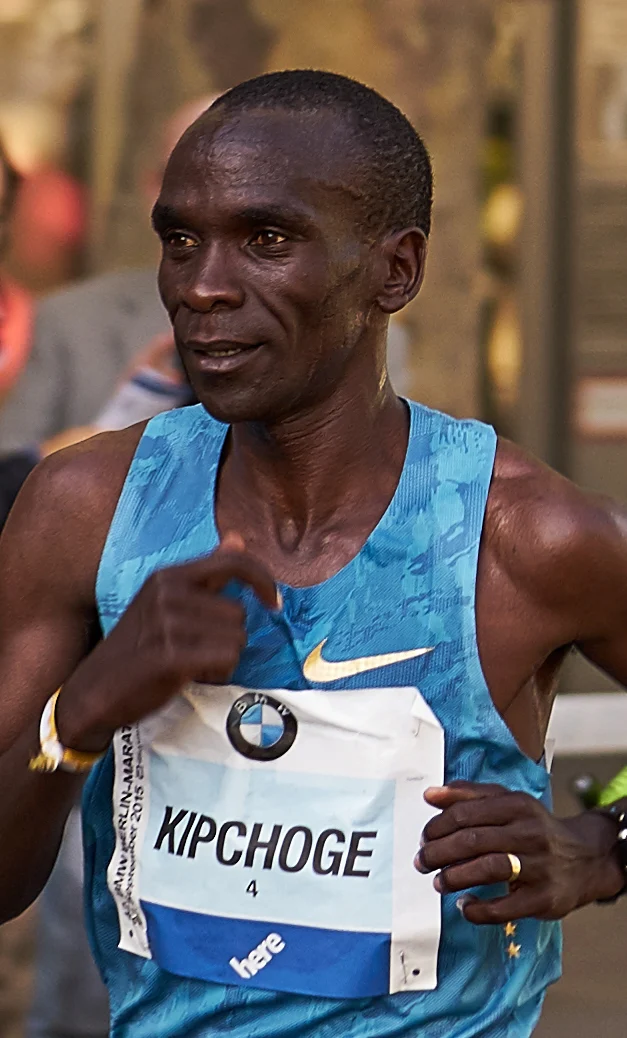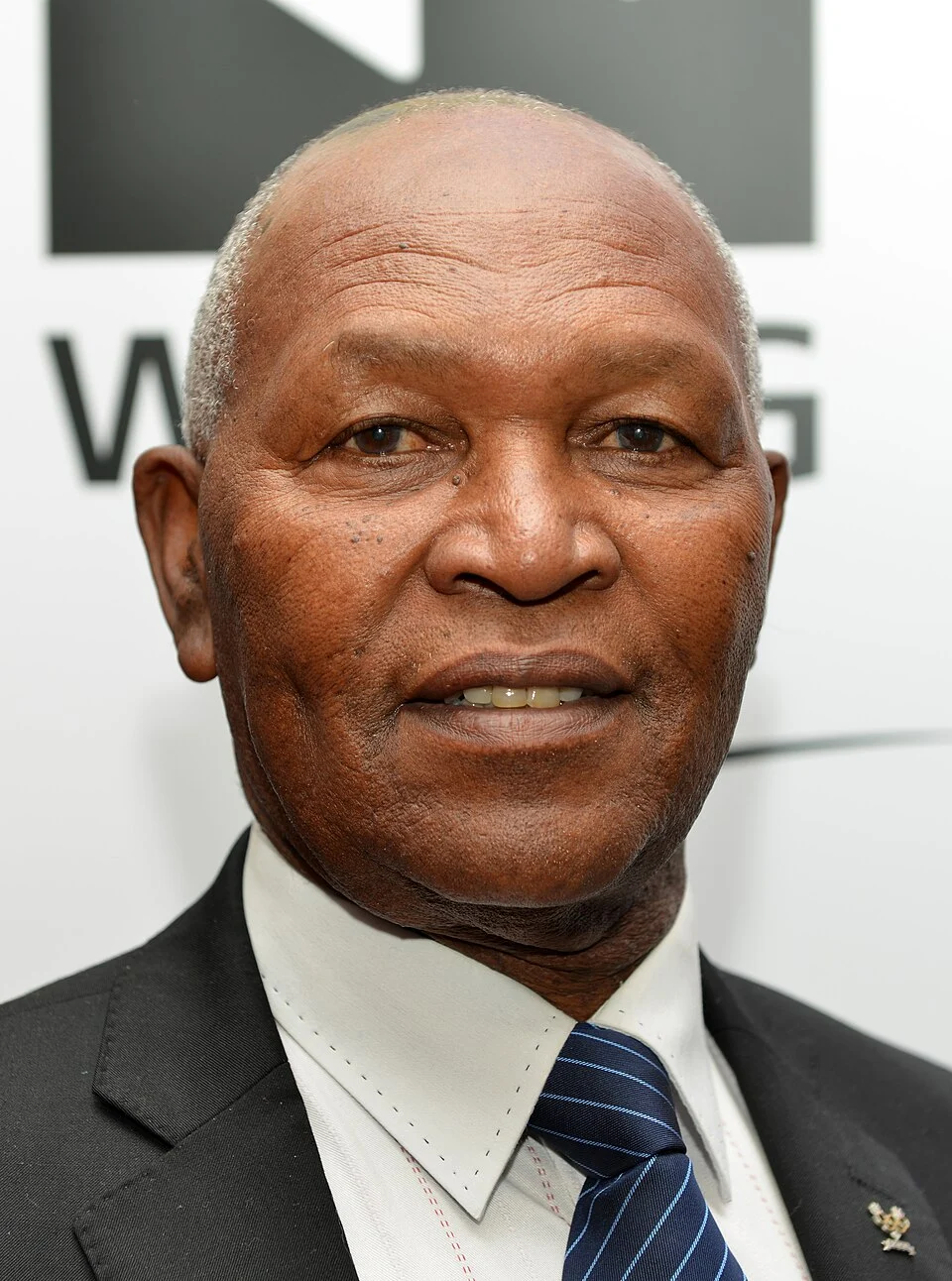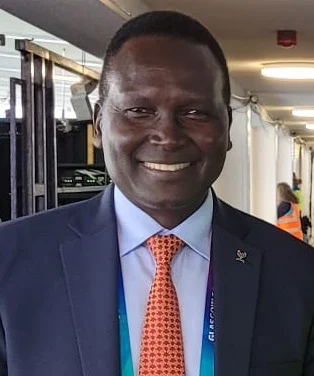
McMarcoP / CC BY 4.0. Resized for the archive. Image credits.
Paul Tergat
Distance runner and world-record setter
He carried cross-country mastery onto the world's roads.
- Theme
- Champions
Paul Tergat won five consecutive world cross-country titles and twice earned Olympic silver over 10,000 metres. He later set a men's marathon world record in Berlin in 2003.
His career spans the disciplines through which Kenyan distance running established global depth. It records not just one breakthrough performance but repeated excellence across terrain, distance and the changing demands of a long competitive life.
Life and work
Paul Kibii Tergat (born 17 June 1969) is a Kenyan former professional long-distance runner. He became the first Kenyan man to set the world record in the marathon in 2003, with a time of 2:04:55, and is regarded as one of the most accomplished long-distance runners of all time. Runnerworld called him the "Most comprehensive runner of all time".
Towards the end of his career, he concentrated exclusively on the marathon. Tergat set several world records and won many titles on the track, in cross country, and on the road. He lives and trains in Eldoret, Kenya.
Paul Tergat was born on 17 June 1969 in Riwo, Baringo District, in Kenya's Rift Valley Province. He attended Riwo Primary School and later joined Kapkawa Boys High School. Unlike many athletes, Tergat realised his talent after graduating from high school.
He won the Lisbon Half Marathon in 2000, setting a new course record and personal best of 59:06. He won the race again in 2005 with a time of 59:10. Tergat's achievements also include 5 victories in the traditional Saint Silvester Road Race, the most important event in Latin American street racing. He holds the record for the present 15 km distance, which he established in 1995. His performances in the Saint Silvester race earned him celebrity status in Brazil.
He has had an intense rivalry with his friend Haile Gebrselassie of Ethiopia. In the Olympic Games 10,000m finals of both the 1996 Atlanta Olympics and the 2000 Sydney Olympics, he was defeated by Gebrselassie by slim margins. In 2000, the margin of victory was only nine-hundredths of a second.
Tergat finished second to Gebrselassie in the 1997 and 1999 World Championships in Athletics at 10,000 m, and finished third in the 1995 version of that race, behind Gebrselassie and Moroccan Khalid Skah.
On the track, Tergat broke Gebrselassie's 10,000-metre world record on 22 August 1997 in Brussels with a time of 26:27.85 minutes. The record was broken again by Gebrselassie in 1998 (time 26:22:75), but Tergat's time remains a Kenyan record (as of 2024). On the road, Tergat broke the half marathon world record on 4 April 1998 in Milan by running in 59:17 minutes. (Tergat had run 58:51 minutes at the Stramilano half marathon in 1996, but a misplaced cone made the course slightly too short and no record was allowed.) The previous record, 59:47 minutes was set by Moses Tanui in 1993. Tergat's world record was broken in 2005 by Samuel Wanjiru, another Kenyan.
When Tergat raced Gebrselassie in the London Marathon in 2002, it was Tergat who beat Gebrselassie; Tergat was in second place behind then world record holder Khalid Khannouchi. The three runners raced again in the 2007 version with Tergat being the only one of them to finish.
Tergat finished second in his first three marathons: London Marathon in 2001 and 2002 and Chicago Marathon in 2001. He continued marathoning by two fourth places: Chicago 2002 and London 2003.
He set the marathon world record of 2:04:55, on 28 September 2003 at the Berlin Marathon. That is an average pace of 0:02:57 per kilometre (20.3 km/h) or 0:04:46 per mile (12.6 MPH). In his world record race, Tergat badly abraded his foot. He later said it felt like the sole of his shoe fell off. He also took a momentary wrong turn near the finish. Tergat's countryman Sammy Korir, who was a pacesetter for the race, nearly caught up to him. Korir took second place in 2:04:56, then the second-fastest marathon performance in history. Tergat's world record was broken in 2007 by Haile Gebrselassie of Ethiopia. Tergat's time remained the Kenyan record until 2009, when winner Duncan Kibet and 2nd placed James Kwambai both timed 2:04:27 at the Rotterdam Marathon
This section adapts selected passages from Paul Tergat by Wikipedia contributors. It is shared under CC BY-SA 4.0. Selected passages; pronunciation guides, lists and reference markers omitted; punctuation and paragraph breaks adjusted. Photographs have separate licences.