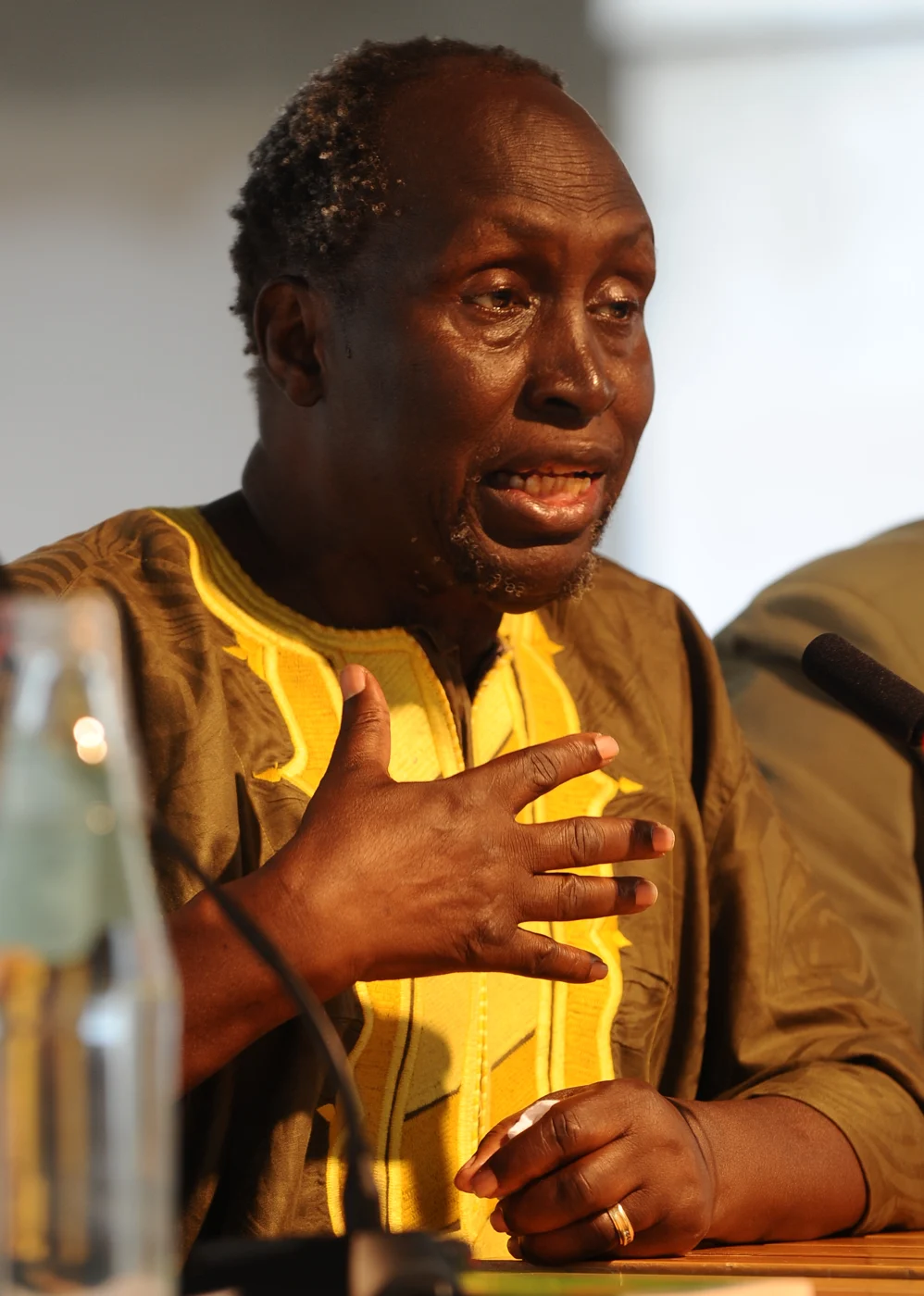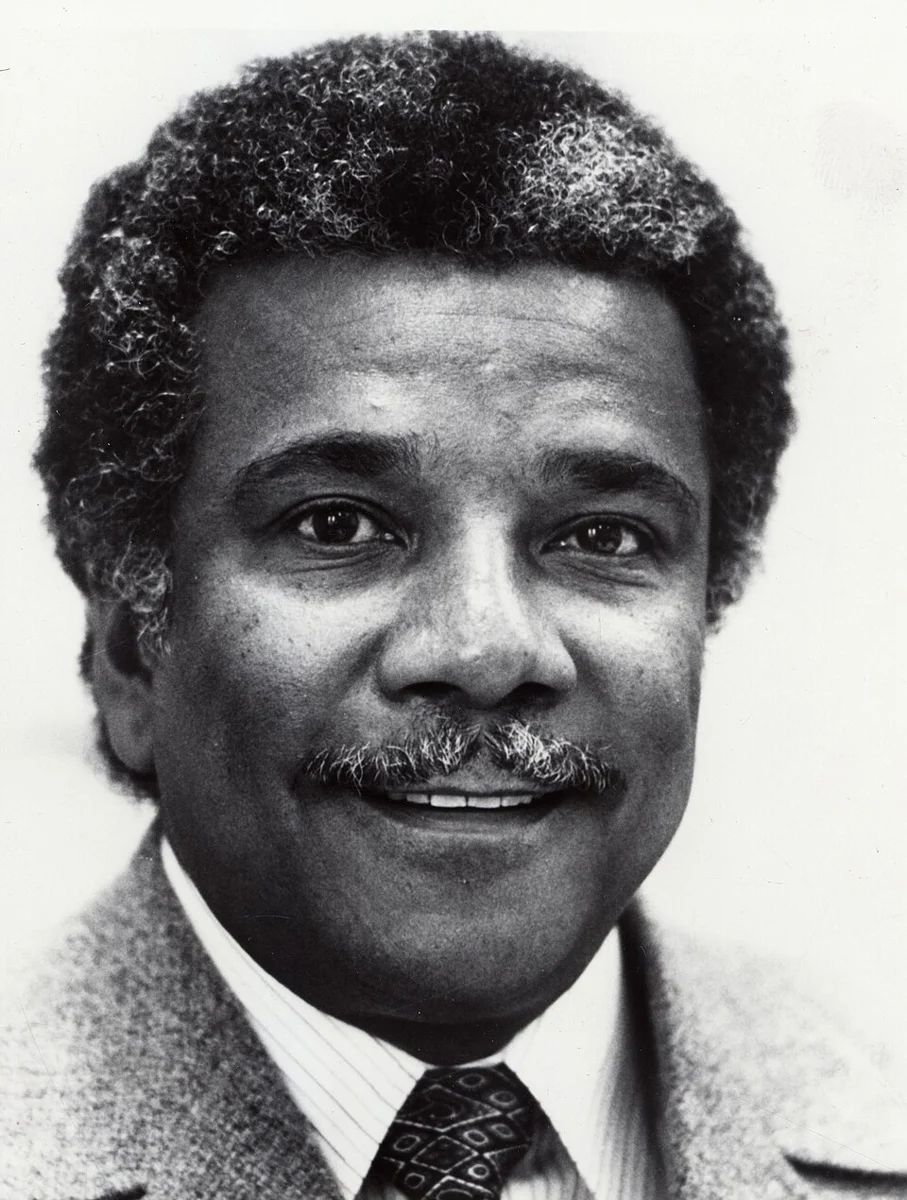
Bentley Historical Library, University of Michigan / CC BY 2.0. Resized for the archive. Image credits.
Ali Mazrui
Political scholar and public intellectual
He brought African arguments into a global public conversation.
- Theme
- Arts & Letters
Ali Mazrui wrote and taught extensively about African politics, history and culture. His work reached audiences beyond universities, notably through the television series The Africans: A Triple Heritage.
His arguments were influential and frequently contested. That debate is part of his contribution: he helped make Africa's place in world history a subject for broad public discussion, rather than a conversation confined to specialists.
Life and work
Ali Al'amin Mazrui (24 February 1933 – 12 October 2014), was a Kenyan-born American academic, professor, and political writer on African and Islamic studies, and North-South relations. He was born in Mombasa, Kenya. His positions included Director of the Institute of Global Cultural Studies at Binghamton University in Binghamton, New York, and Director of the Center for Afro-American and African Studies at the University of Michigan. He produced the 1980s television documentary series The Africans: A Triple Heritage.
Mazrui was born on 24 February 1933 in Mombasa, Kenya Colony. He was the son of Al-Amin Bin Ali Mazrui, the Chief Islamic Judge (Qadi) in Kadhi courts of Kenya Colony. His father was also a scholar and author, and one of his books has been translated into English by Hamza Yusuf as The Content of Character (2004), to which Ali supplied a foreword. The Mazrui family was a historically wealthy and important family in Kenya, having previously been the rulers of Mombasa. Ali's father was the Chief Qadi of Kenya, the highest authority on Islamic law. Mazrui credited his father for instilling in him the urge for intellectual debate, as his father not only participated in court proceedings but also was a renowned pamphleteer and public debater. Mazrui would, from a young age, accompany his father to court and listen in on his political and moral debates. Mazrui initially intended to follow the path of his father as an Islamist and pursue his study in Al-Azhar University in Egypt. Due to poor performance in the Cambridge School Certificate examination in 1949, Mazrui was refused entry to Makerere College (now Makerere University), the only tertiary education institute in East Africa at that time. He then worked in the Mombasa Institute of Muslim Education (now Technical University of Mombasa).
Mazrui attended primary school in Mombasa, where he recalled having learned English specifically to participate in formal debates, before he turned the talent to writing. Journalism, according to Mazrui, was the first step he took down the academic road. In addition to English, Mazrui also spoke Swahili and Arabic. After getting a Kenyan Government scholarship, Mazrui furthered his study and obtained his B.A. degree with Distinction from Manchester University in Great Britain in 1960, his M.A. from Columbia University in New York in 1961, and his doctorate (DPhil) from Oxford University (Nuffield College) in 1966. He was influenced by Kwame Nkrumah's ideas of pan-Africanism and consciencism, which formed the backbone of his discussion on "Africa's triple heritage" (Africanity, Islam and Christianity).
Mazrui began his academic career at Makerere University in Uganda, where he had dreamed of attending since he was a child. At Makerere, Mazrui served as a professor of political science, and began drawing his international acclaim. Mazrui felt that his years at Makerere were some of the most important and productive of his life. He told his biographer that 1967, when he published three books, was the year that he had made his declaration to the academic world "that I planned to be prolific – for better or for worse!" During his time at Makerere, Mazrui also directed the World Order Models Project in the Department of Political Science, a project which brought together political scientists from across the world to discuss what an international route to lasting peace might be.
Mazrui reflected that he felt forced to leave the University of Makerere. His departure was likely the result of his desire to remain a neutral academic in the face of pressures to attach his growing prestige as a political thinker to one of the regional factions.
His first solicitation was from John Okello, the leader of the Zanzibar Revolution, who came to Mazrui's house in 1968 to urge Mazrui to join his cause. Okello originally tried to convince Mazrui to become an advisor to him and then simply tried to enlist Mazrui's assistance in writing a constitution for Zanzibar. Mazrui told Okello that, while he was inclined to sympathize with the cause, it would be a violation of the moral duty of a professor and an academic to join with a political agenda. This incident shows the level of international prestige that Mazrui had already accumulated. Okello had sought him out specifically because he knew and valued Ali's reputation as an anti-imperialist intellectual.
This section adapts selected passages from Ali Mazrui by Wikipedia contributors. It is shared under CC BY-SA 4.0. Selected passages; pronunciation guides, lists and reference markers omitted; punctuation and paragraph breaks adjusted. Photographs have separate licences.