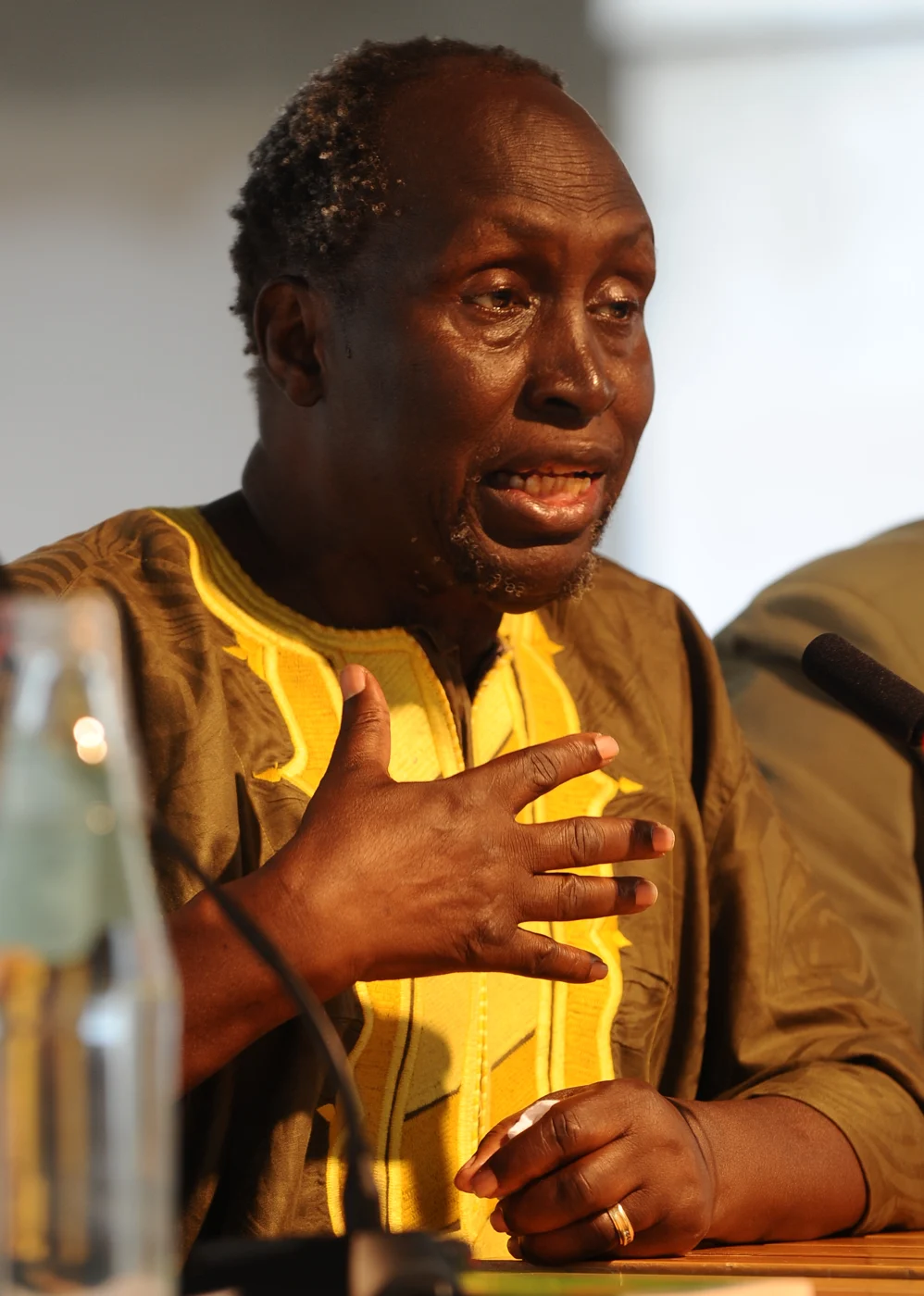
Asenath Bole Odaga
Writer and oral-literature researcher
She helped pass stories from spoken memory into books.
- Theme
- Arts & Letters
Asenath Bole Odaga wrote for children and worked to document oral literature, particularly traditions associated with western Kenya. Her publishing and storytelling connected young readers with languages and histories close to home.
Her contribution is that of a real author and researcher who preserved and reworked stories. The folktales she recorded are literary traditions; their characters are not presented here as historical people.
Life and work
Asenath Bole Odaga (5 July 1938 – 1 December 2014) was a Kenyan publisher and author of novels, plays, children's books, and other literary works. Odaga also promoted literature in Kenyan languages and the study of oral literature by writing in Luo and co-authoring a guide to oral literature for students.
Born in Rarieda, Kenya, on 5 July 1938, Asenath Bole Odaga was educated at Alliance Girls High School and the University of Nairobi. At the University of Nairobi, Odaga submitted a thesis for the Master of Arts degree: Educational Values of "Sigendeni Luo": The Kenya Luo Oral Narratives.
In 1982, Odaga founded Lake Publishers, becoming the first female publisher in Kenya. She would later open the Thu-Thinda bookstore in Kisumu. She founded the Kenya Women Literature Group in 1986, with the intention of developing works in Kenyan languages by and for women.
Odaga was listed by the Daily Nation as one of the writers having the most impact on Kenyan society. Her work has been cited as an influence on Kenyan novelist Yvonne Adhiambo Owuor.
Odaga's contribution extended beyond authorship into the institutions through which books reached readers. In 1982 she established Lake Publishers, and she later opened the Thu-Thinda bookshop in Kisumu. Publishing and bookselling are consequential parts of a literary culture. They influence which manuscripts become books, which languages appear in print and whether a reader can encounter a work close to home.
She founded the Kenya Women Literature Group in 1986 to encourage writing in Kenyan languages by and for women. That work connected the production of literature with the question of whose experience it could represent. It also created a setting in which writing did not have to depend entirely on the priorities of established publishing institutions.
Her scholarly work on Luo oral narratives examined their educational value. Bringing oral literature into research and school materials recognises the skill, memory and knowledge involved in traditions that are sometimes treated as if they existed outside serious intellectual life. The stories she collected remain literary and cultural works; they do not turn their characters into documented historical people.
Her books ranged across children's stories, fiction, dictionaries and studies of literature. Works such as The Villager's Son, Yesterday's Today and her English-Dholuo language materials show that breadth. The common contribution is to make Kenyan experience available to readers in different forms and at different ages. Her career helped sustain both the creation of new writing and the conditions in which a local reading culture could grow. That institutional work belongs beside the individual titles in any account of her place in Kenyan literature.
Her work connected literary creation, language preservation and the practical business of putting books into readers' hands.
This section adapts selected passages from Asenath Bole Odaga by Wikipedia contributors. It is shared under CC BY-SA 4.0. Selected and edited passages, with additional editorial context; lists and reference markers omitted; punctuation and paragraph breaks adjusted. Photographs have separate licences.