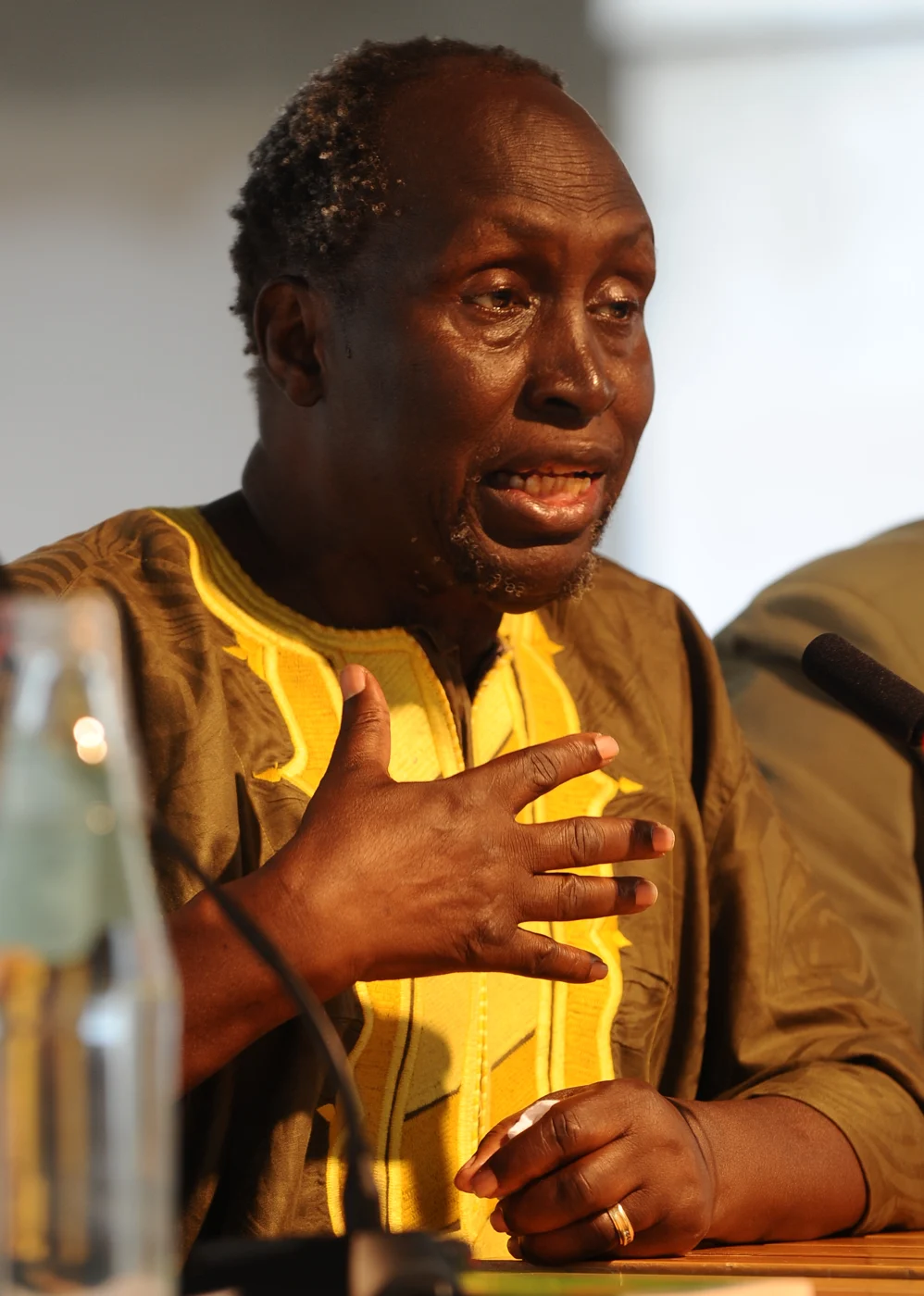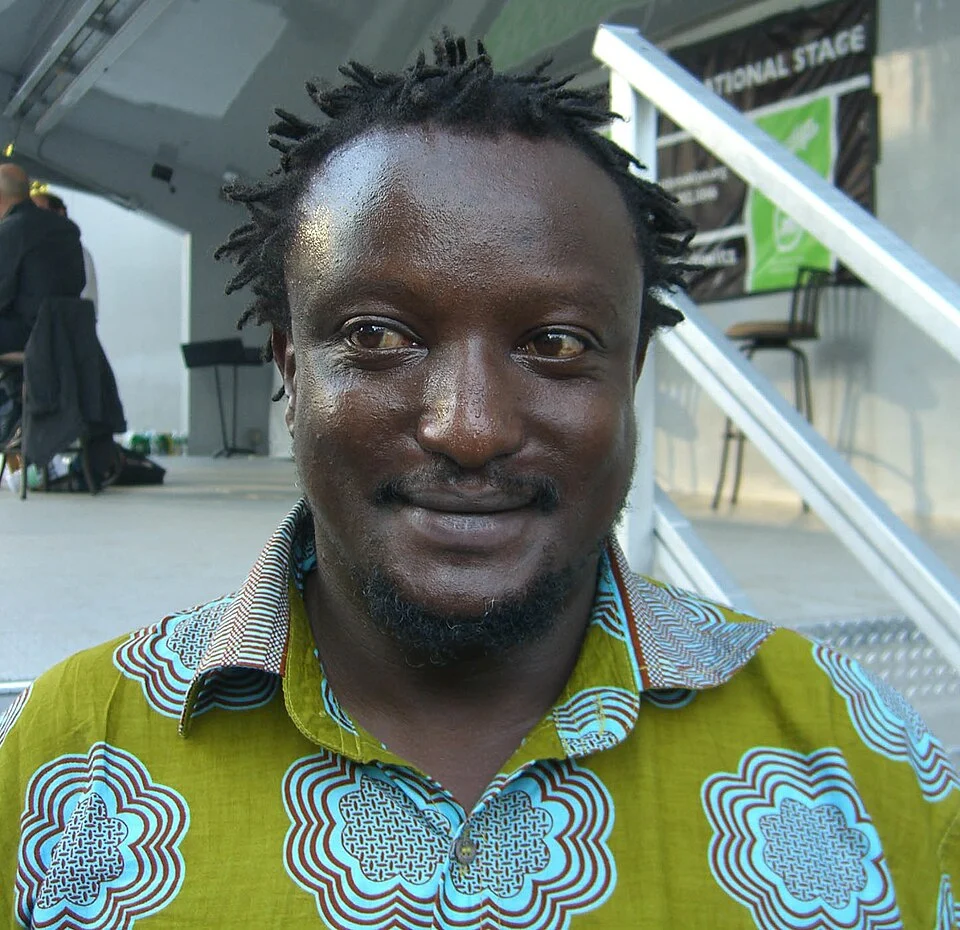
Nightscream / CC BY 3.0. Resized for the archive. Image credits.
Binyavanga Wainaina
Writer and literary organiser
He helped a new generation of African writers find its readers.
- Theme
- Arts & Letters
Binyavanga Wainaina won the Caine Prize in 2002 for Discovering Home and helped establish Kwani?, an important platform for contemporary Kenyan writing. He brought editorial work, memoir and public argument into the same creative life.
His essay How to Write About Africa challenged the habits through which the continent was represented. He also spoke openly about sexuality, helping widen public discussion about whose lives could be told on their own terms.
Life and work
Kenneth Binyavanga Wainaina (18 January 1971 – 21 May 2019) was a Kenyan author, journalist and 2002 winner of the Caine Prize for African Writing. In 2003, he became the founding editor of Kwani? literary magazine, launched in Kenya, East Africa. In April 2014, Time magazine included Wainaina in its annual Time 100 as one of the "Most Influential People in the World".
Binyavanga Wainaina was born on 18 January 1971 in Nakuru in Rift Valley Province, Kenya. He attended Moi Primary School in Nakuru, Mangu High School in Thika, and Lenana School in Nairobi. He later studied commerce at the University of Transkei in South Africa, where he went to live in 1991.
In July 2002, he won the Caine Prize for his short story "Discovering Home" (the judges being Ahdaf Soueif, Margaret Busby, Jason Cowley and Abdulrazak Gurnah). Wainaina was the founding editor of Kwani?, a literary magazine created in Kenya for emerging writers, driven by an artistic revolution that started in 2002. Established in 2003, Kwani? has since become an important source of new writing from Africa; Yvonne Owuor, winner of the 2003 Caine Prize, also wrote for the magazine.
In 2003, he was given an award by the Kenya Publishers Association for his services to Kenyan literature. He wrote for The EastAfrican, National Geographic, The Sunday Times (South Africa), Granta, The New York Times, Chimurenga and The Guardian (UK).
In 2007, Wainaina was a writer-in-residence at Union College in Schenectady, NY (USA). In the fall of 2008, he was in residence at Williams College, in Williamstown, Massachusetts, where he was teaching, lecturing and working on a novel. He was a Bard Fellow and the director of the Chinua Achebe Center for African Literature and Languages at Bard College.
In January 2007, Wainaina was nominated by the World Economic Forum as a "Young Global Leader" – an award given to people for "their potential to contribute to shaping the future of the world." He subsequently declined the award. In a letter to Klaus Schwab and Queen Rania of Jordan, he wrote:
I assume that most, like me, are tempted to go anyway because we will get to be "validated" and glow with the kind of self-congratulation that can only be bestowed by very globally visible and significant people, and we are also tempted to go and talk to spectacularly bright and accomplished people – our "peers". We will achieve Global Institutional Credibility for our work, as we have been anointed by an institution that many countries and presidents bow down to.The problem here is that I am a writer. And although, like many, I go to sleep at night fantasizing about fame, fortune and credibility, the thing that is most valuable in my trade is to try, all the time, to keep myself loose, independent and creative ... it would be an act of great fraudulence for me to accept the trite idea that I am "going to significantly impact world affairs".
His debut book, a memoir entitled One Day I Will Write About This Place, was published in 2011. In January 2014, in response to a wave of anti-gay laws passed in Africa, Wainaina publicly announced that he was gay, first writing an essay entitled "I Am a Homosexual, Mum", which he described as a "lost chapter" of his 2011 memoir, and then tweeting: "I am, for anybody confused or in doubt, a homosexual. Gay, and quite happy."
This section adapts selected passages from Binyavanga Wainaina by Wikipedia contributors. It is shared under CC BY-SA 4.0. Selected passages; pronunciation guides, lists and reference markers omitted; punctuation and paragraph breaks adjusted. Photographs have separate licences.