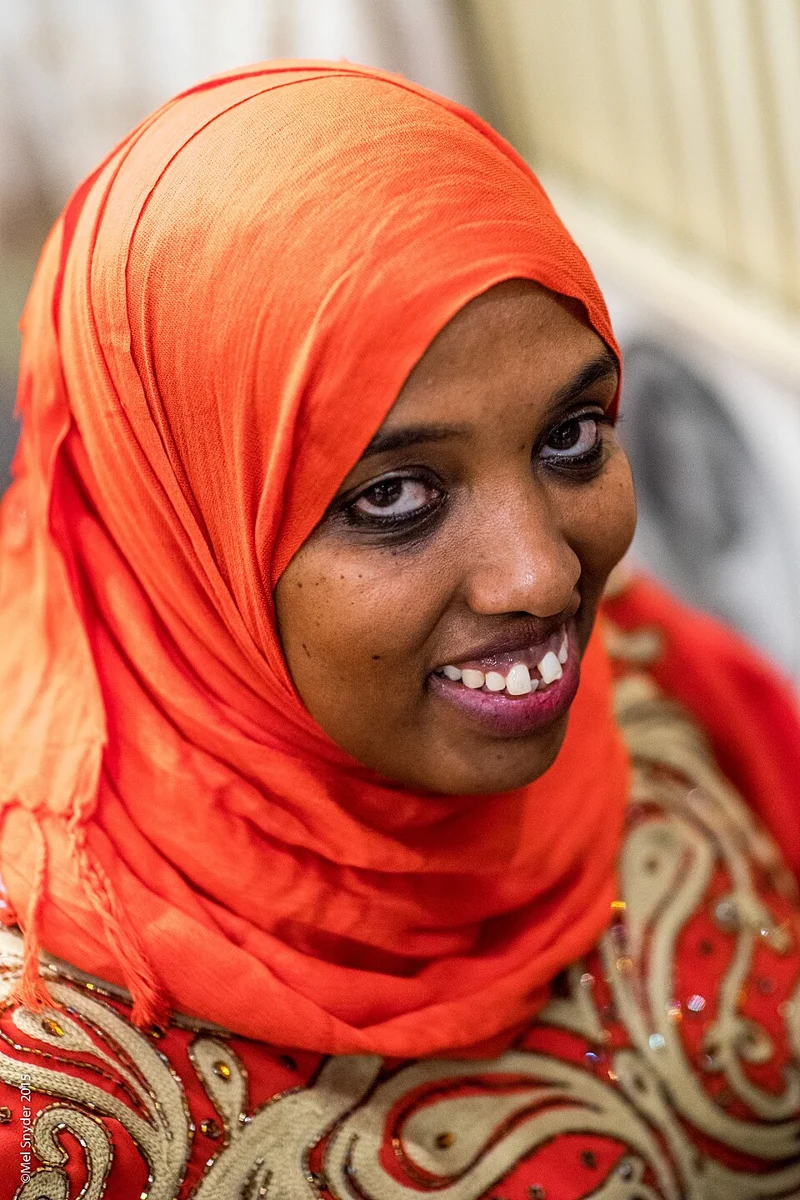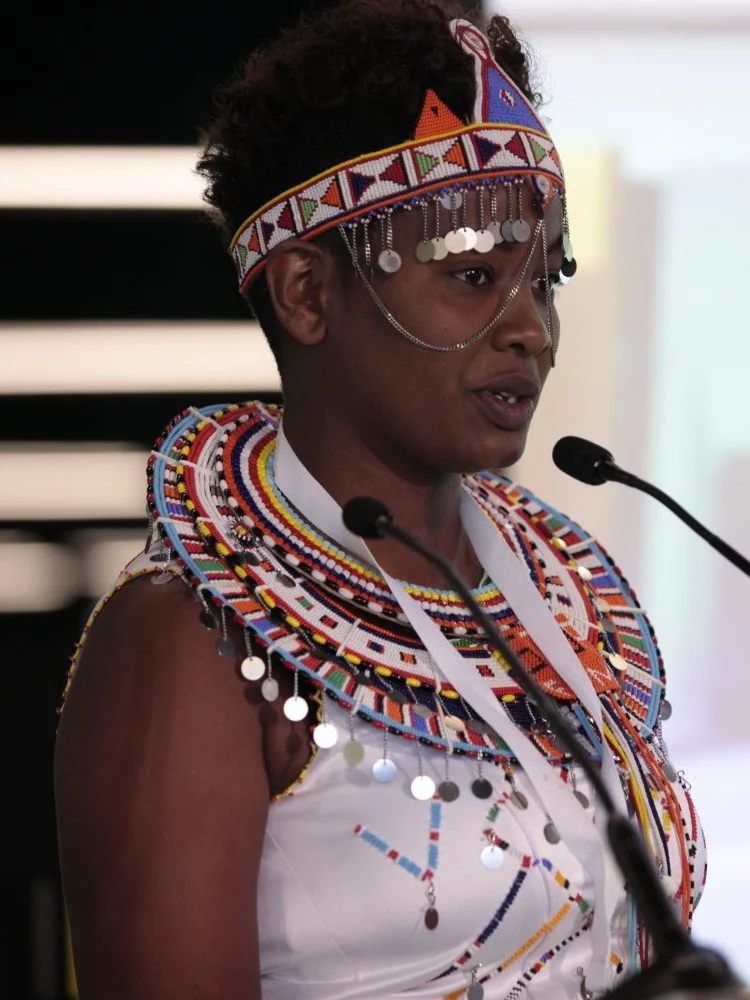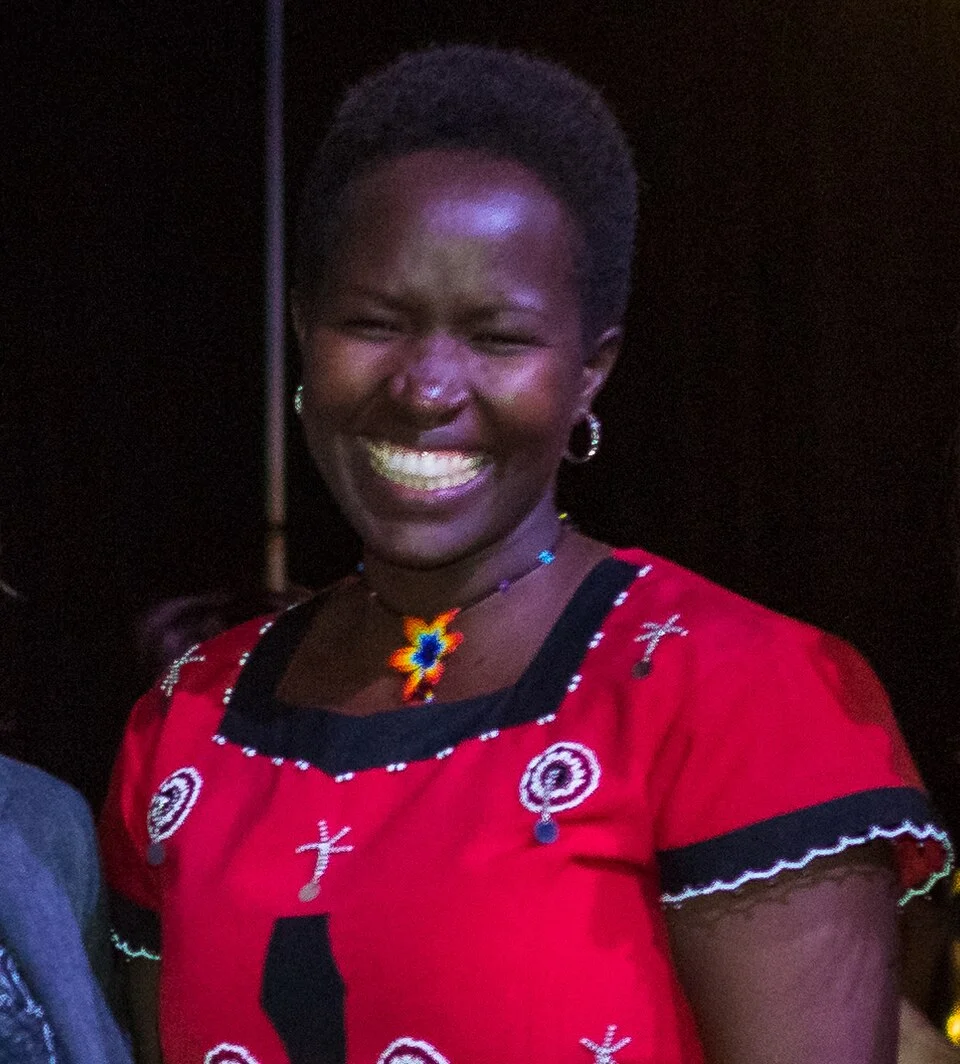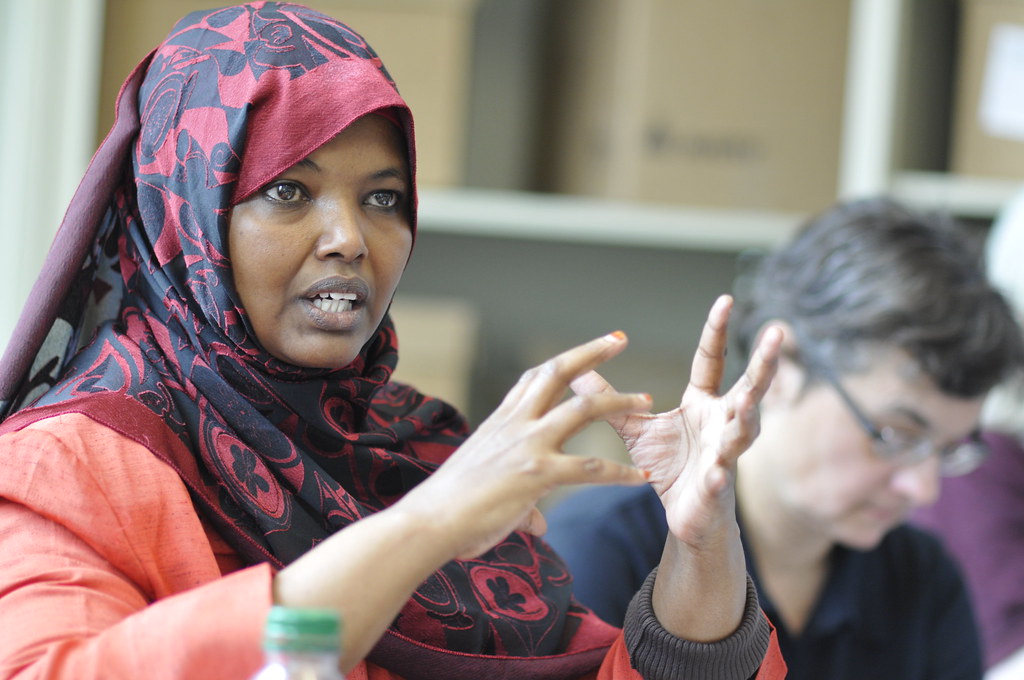
AFSC Photos / CC BY-NC-ND 2.0. Published file, unaltered. Image credits.
Dekha Ibrahim Abdi
Peacebuilder
She helped neighbours become the authors of their own peace.
- Theme
- Community
Dekha Ibrahim Abdi helped develop community-led peace processes in northern Kenya, including work rooted in Wajir. Her approach brought people across religious, clan and social divisions into sustained dialogue.
She received the Right Livelihood Award in 2007. Her contribution lay in treating peace as a practice built through relationships, local institutions and patient negotiation, rather than a settlement announced only by national leaders.
Life and work
Dekha Ibrahim Abdi (Somali: Deeqa Ibraahim Cabdi, 17 November 1964 – 14 July 2011) was a Kenyan peace activist based in Mombasa, Kenya. She worked as a consultant to government and civil society organisations. She was of Somali ethnicity.
Dekha was a trustee of Coalition for Peace in Africa (COPA) and of NOMADIC, a pastoralist organisation based in Wajir. She was also a founding member of the Wajir Peace and Development Committee, the Coalition for Peace in Africa, ACTION (Action for Conflict Transformation), and the Peace and Regeneration Oasis (PRO).
Dekha worked as a consultant trainer on peacebuilding and pastoralists' development with many local and international agencies in various countries, including Cambodia, Jordan, Ethiopia, Somalia, South Africa, Netherlands, Israel, Palestine, Zimbabwe, the UK, Uganda and Kenya. She was also an Associate of Responding to Conflict and previously worked as RTC's Trainer and Learning Coordinator. Some of her mediation and peacebuilding insights can be read up in the book "Mediation and Governance in Fragile Contexts: Small Steps to Peace" that was published in 2019. Audio clips of interviews of 2010 and 2011 with Dekha can be found online.
She was also honoured with Gernika´s Peace and Reconciliation Prize in 2008 (Basque Country) and Hessian Peace Prize of Germany in 2009.
The Wajir experience is important because peace work often begins before a formal negotiating table exists. People need ways to communicate across divisions, identify immediate dangers and make agreements credible within their own communities. Abdi's work recognised that a settlement imposed from outside would remain fragile if relationships and local institutions could not sustain it.
Her career as a trainer carried lessons from that setting into other conflicts. This did not mean treating different societies as interchangeable. It meant paying attention to how people describe their own problems, who is missing from a discussion, and which practical steps can keep dialogue alive. Her international awards recognised an approach to peace grounded in repeated work with people, rather than only in a single public agreement. That is the contribution her life adds to Kenya's history of civic leadership.
The international training she undertook also made Kenyan community experience a source of knowledge for others. Lessons moved outwards from Wajir, challenging the assumption that expertise in conflict resolution always arrives from national capitals or foreign institutions. Her career demonstrates how a locally developed practice can enter an international field while retaining attention to relationships and context.
The continuing record of interviews and teaching associated with her offers a way to study that practice beyond the brief accounts attached to awards. Her legacy includes methods that other people can question, adapt and carry forward.
This section adapts selected passages from Dekha Ibrahim Abdi by Wikipedia contributors. It is shared under CC BY-SA 4.0. Selected and edited passages, with additional editorial context; lists and reference markers omitted; punctuation and paragraph breaks adjusted. Photographs have separate licences.