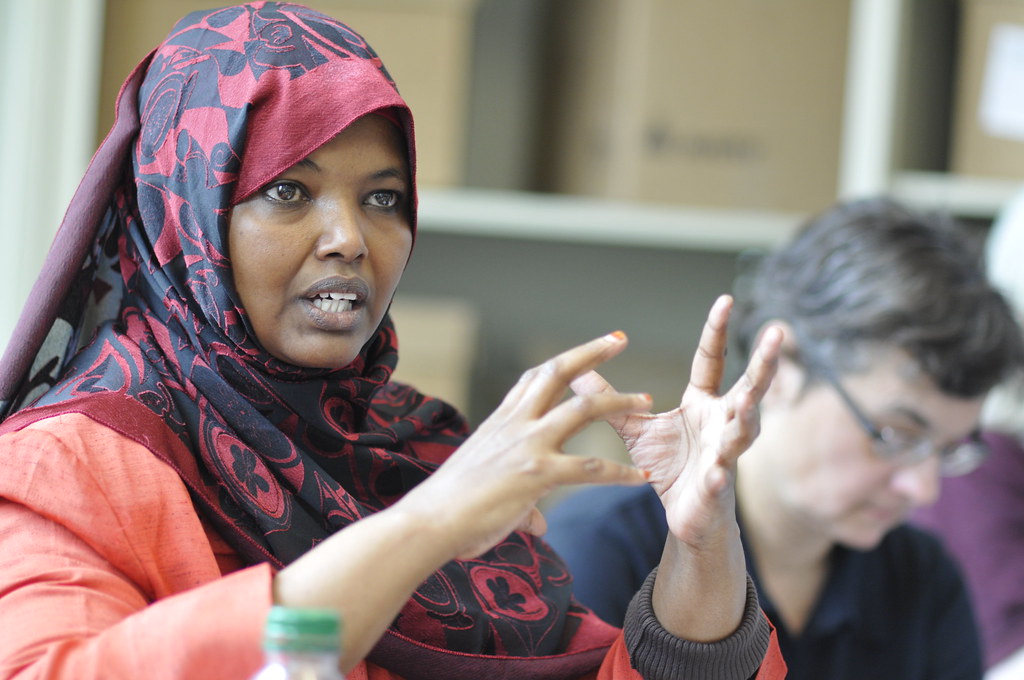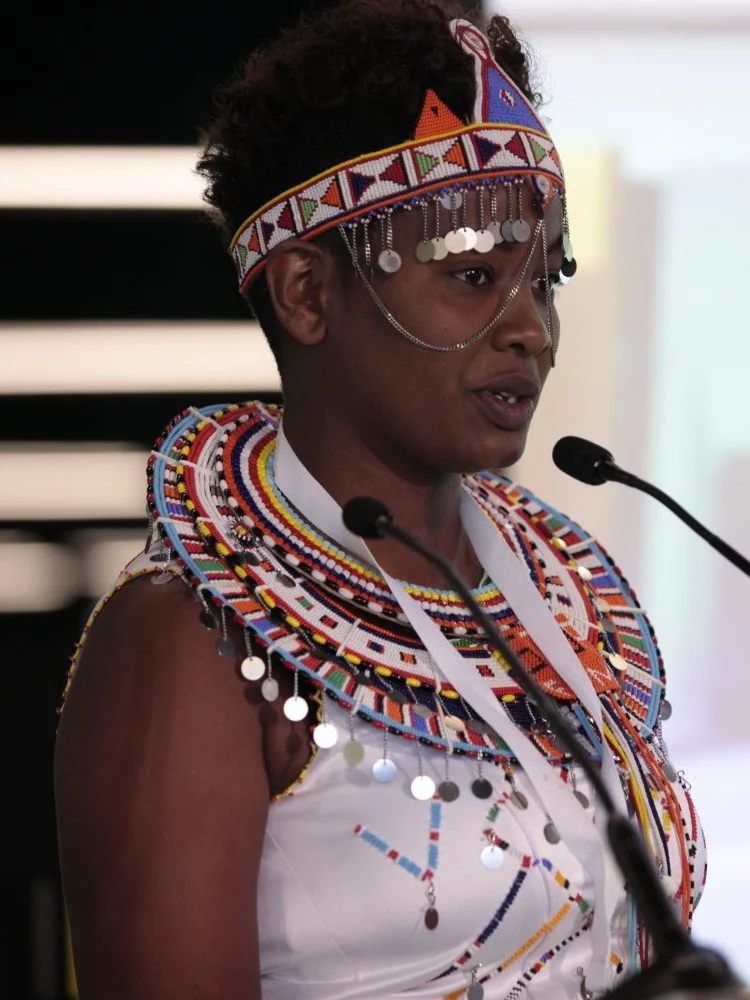
US Department of Labor / CC BY 2.0. Resized for the archive. Image credits.
Kakenya Ntaiya
Educator and girls' rights advocate
She built educational opportunities where girls were expected to have few choices.
- Theme
- Community
Kakenya Ntaiya is an educator and the founder of Kakenya's Dream, an organisation supporting girls through schooling, health services and wider opportunities. Her work began in her home community of Enoosaen in western Kenya. It connects a personal struggle to remain in education with the creation of institutions through which other girls can make choices about their own lives.
Her early life included the expectation of marriage while still young and the experience of female genital mutilation. She negotiated to continue her education and later studied in the United States, first at Randolph-Macon Woman's College and then at the University of Pittsburgh, where she completed a doctorate in education. Her biography should not be treated as a description of every Maasai girl's experience. It records the particular circumstances she confronted and the work she chose to undertake afterwards.
The organisation's own history dates its foundation to 2008. Its first school, the Kakenya Center for Excellence, admitted thirty fourth-grade pupils in 2009. The school connected education with protection from harmful practices. A place to learn needed to be a place in which a girl could continue learning without being forced to leave for marriage. This made engagement with families and the wider community part of the educational project.
The work developed beyond the first classroom. Health and leadership training began in 2011, and a scholarship programme followed to support pupils moving into secondary school. That continuity is important. Completing one stage of education does not guarantee access to the next, particularly where financial and social pressures remain. The programme sought to prevent the progress made at primary level from ending at the next transition.
The first pupils' movement into higher education gave the organisation a longer time horizon. Its reports document students progressing from the original school into universities in Kenya and elsewhere. Their achievements are their own, supported by teachers, families and the institution Ntaiya helped establish. Describing the founder's contribution should keep those learners visible as people shaping their own futures.
In 2024, Kakenya's Dream opened a youth-friendly health and wellness centre. Its stated model brings education together with health support, mentorship and skills. These activities recognise that a girl's ability to use an educational opportunity can depend on circumstances outside a lesson: safety, confidence, health information and a network prepared to support her choices.
Ntaiya's international recognition has helped make the work widely known. But the contribution is most clearly understood through the patient development of a local institution. A school has to open repeatedly, teachers need support, pupils move between stages, and relationships with a community must continue after public attention turns elsewhere. That ordinary continuity is part of what makes an educational promise credible.
Her life also changes the direction of the familiar story of an individual leaving home to succeed. The education she pursued became a resource for work in the place from which she came. Her place in this archive recognises both the determination involved in that journey and the decision to build opportunities that would not depend on every other girl having to negotiate the same barriers alone.
Add to this story