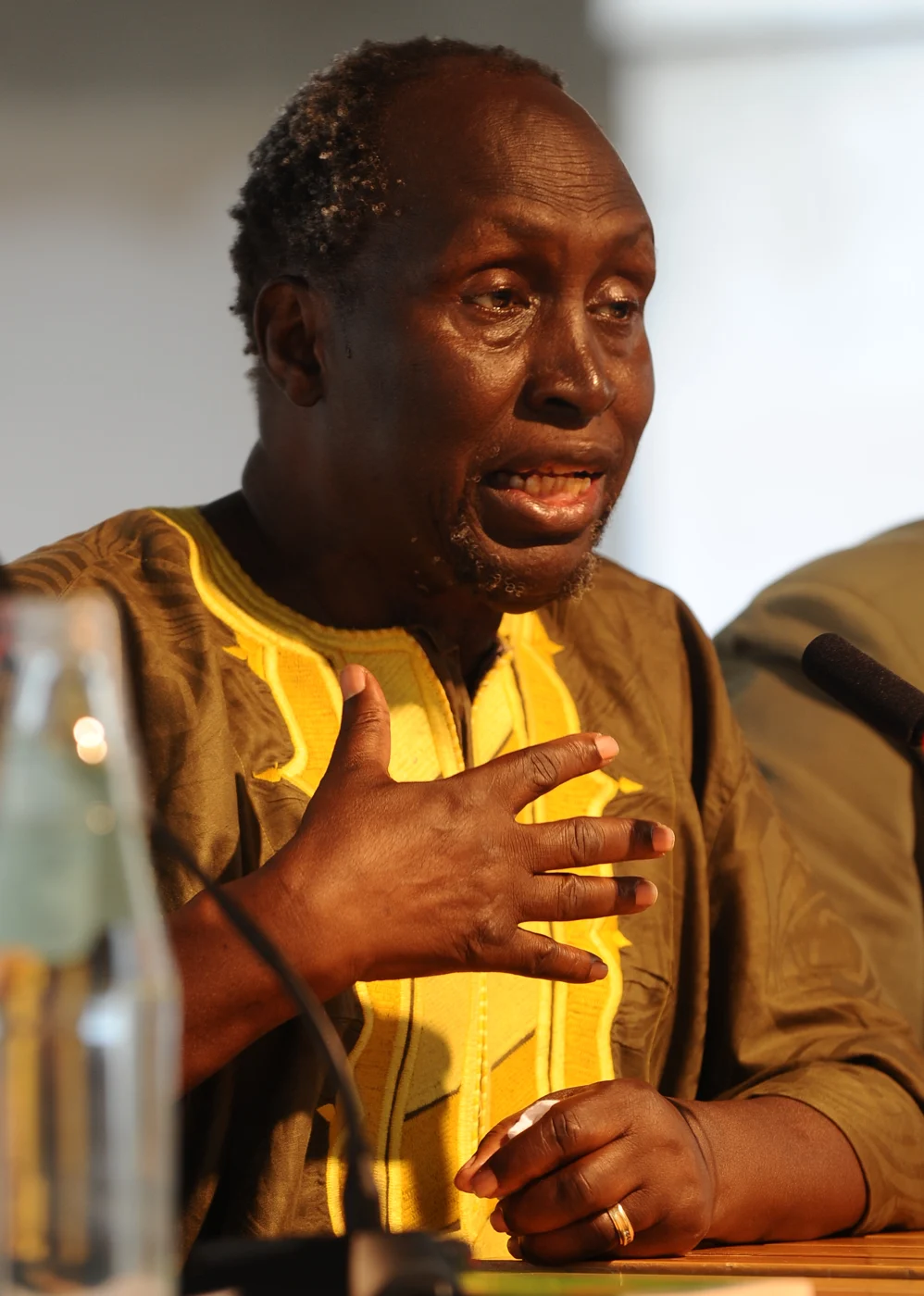
Francis Imbuga
Playwright and educator
He used the stage to examine what power does to a society.
- Theme
- Arts & Letters
Francis Imbuga became one of Kenya's best-known playwrights through works including Betrayal in the City and The Successor. His drama explored authoritarianism, political ambition and the pressures placed on ordinary people.
As an educator, he also helped sustain the study and performance of theatre. His plays have remained part of classroom and public debate because they make questions about loyalty, conscience and leadership tangible.
Life and work
Francis Davis Imbuga (1947–2012) was born in Wenyange village, West Maragoli in Western Kenya in 1947. He was a Kenyan writer, playwright, literature scholar, teacher and professor at Kenyatta University. His works, including Aminata and Betrayal in the City, have become staples in the study of literature schools in Kenya.
His works have consistently dealt with issues such as the clashes of modernity and tradition in the social organisation of African communities. His play Betrayal in the City was Kenya's entry to FESTAC.
He attended Keveye Primary school and Chavakali Intermediate School. In 1963 he joined Alliance High School. Imbuga studied at the University of Nairobi where he received a Bachelor of Arts degree in 1973 and a Master of Arts degree in 1975. In 1992, he received a Doctor of Philosophy degree from the University of Iowa.
Imbuga started his career as an actor at Kenya Broadcasting Corporation in 1970. He left this post in 1973 and in 1976 he became a lecturer in the Department of Educational Communication and Technology at the University of Nairobi. He later joined Kenyatta University as professor of literature, holding the posts of Dean of the Literature Department, Dean of Arts and Director of Quality Assurance. Imbuga was an honorary Fellow of the University of Iowa International Writing Programme.
Imbuga started writing plays in 1969. His play Omolo was chosen as an entry in the Kenya National School's Drama Festival finals.
Imbuga's writing career began alongside acting and broadcasting. That background matters to a playwright: the language on a page must also work through voices, bodies and an audience gathered in a room. His later teaching connected the creation of plays with the study of how performance communicates.
His bibliography includes The Fourth Trial, The Married Bachelor, The Successor, Man of Kafira and Aminata, as well as Betrayal in the City. These works placed conflicts over power, social expectation and personal responsibility before readers and audiences. A play can make an argument without turning every character into a spokesperson. It allows pressure, contradiction and consequence to be experienced through a developing situation.
The continuing presence of his work in education gave those questions a life beyond the first production. Students encountered drama as something to read, discuss and perform, while teachers used the plays to open conversations about authority and conscience. That relationship between literary creation and the classroom was a significant part of his contribution.
His university career also involved institutional responsibilities. The work of a scholar can include developing teaching, supporting colleagues and maintaining the conditions in which a discipline continues. Imbuga's life brought that work together with a public reputation as a dramatist. He helped give Kenyan theatre both texts that travelled widely and a place within the country's educational institutions.
This section adapts selected passages from Francis D. Imbuga by Wikipedia contributors. It is shared under CC BY-SA 4.0. Selected and edited passages, with additional editorial context; lists and reference markers omitted; punctuation and paragraph breaks adjusted. Photographs have separate licences.