Hellen Nkuraiya
Educator and community organiser
She worked to make education a practical route to safety and independence.
- Theme
- Community
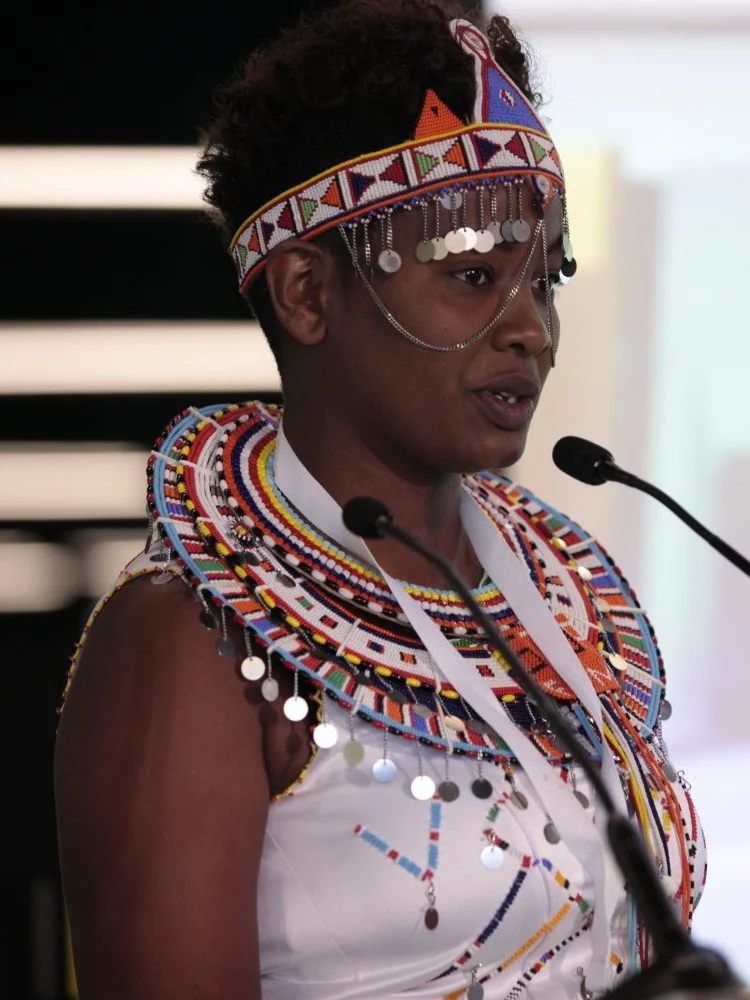
Hellen Nkuraiya is an educator and community organiser associated with Maji Moto and initiatives supporting Maasai women and girls. Her work centres on a practical relationship between safety and education. A place in a classroom is valuable, but a child also needs the conditions that make it possible to remain there. Her organising connects schooling with protection, community support and the ability to imagine a future beyond an imposed marriage.
The account published by Jamii Moja, an organisation that has worked with her, describes her experience of being subjected to arranged marriages as a child and her determination to continue school. The biography relates those experiences to her later advocacy. They are not presented here as a description of every Maasai household. Her work arises within a particular community and addresses harmful practices while continuing to value the wider culture to which she belongs.
Nkuraiya worked as a government teacher. According to Jamii Moja's account, she began providing protection for girls facing female genital mutilation in 2002. She understood education as one of the ways to create a more secure alternative. The challenge was not simply to remove a girl from an immediate danger; it was to sustain a setting in which she could learn and remain supported afterwards.
In 2008, she founded Enkiteng Lepa School in Maji Moto. The school developed classrooms and associated accommodation for pupils and teachers. Its provision included evening learning opportunities for children whose daytime responsibilities involved livestock, as well as adults seeking further education. These arrangements show an effort to adapt the institution to the lives around it rather than assuming that everyone could already fit a conventional school timetable.
The school's community setting is important. Changing an expectation about a girl's future can require conversations with relatives, teachers and local leaders as well as support for the girl herself. A durable educational opportunity needs people prepared to defend it. Nkuraiya's work has depended on relationships and partnerships that connect a school with that wider responsibility.
She has also worked with organisations supporting education, health and livelihoods. Jamii Moja records the relationships through which its own work developed in Maji Moto and identifies her among the local leaders involved. This gives her story a different emphasis from accounts in which assistance appears to arrive solely from outside. The local knowledge and continuing commitment of the people receiving and shaping a partnership are part of how it functions.
Her contribution invites a broader understanding of educational leadership. It includes teaching, creating an institution, recognising danger and finding ways for people with competing responsibilities to take part. These activities may be less visible than national examination results or an international award, but they influence who has an effective chance to learn.
The sources linked here document particular stages of that work. This profile does not attach an unverified birth date or a complete private history to them. It recognises an identifiable educator whose sustained organising has expanded opportunities within her community, while keeping the girls and women served by that work at the centre of its meaning.
Add to this story