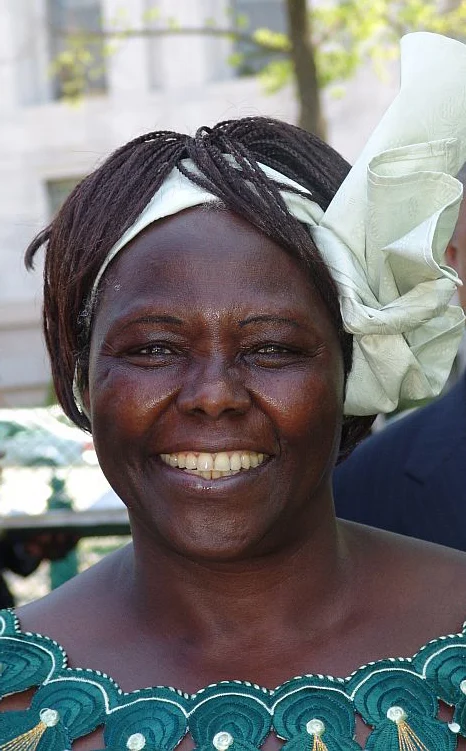
John Marie Seroney
Parliamentarian and political prisoner
He defended Parliament's right to question those in power.
- Theme
- Conscience
John Marie Seroney became a prominent parliamentary critic of authoritarian government. His insistence on the independence of the legislature brought him into conflict with the executive.
Detained without trial in 1975, he was subsequently recognised by Amnesty International as a prisoner of conscience. His story is part of the struggle to preserve parliamentary debate as a real check on power.
Life and work
Jean-Marie Seroney (25 July 1927 – 6 December 1982) was a Kenyan human rights advocate, legislator, and an Amnesty International prisoner of conscience. He was detained as a prisoner of conscience for 1,155 days.
Seroney served as the Member of the Legislative Council for Nandi Constituency from 1961 to 1963 and a Member of Parliament (MP) for Nandi North from 1963 to 1966 before becoming the Member for the newly formed Tinderet Constituency from 1966 to 1975. As a legislator, he worked hard to introduce bills that would remove or at least check the excessive powers vested in the president as a result of the numerous amendments to the Constitution. He also brought in the first private member's bill to help ensure that Kenya's elections were free, fair, and inclusive.
Seroney decried what he described as the wanton abuse of power by the executive and condemned corruption, the unfair distribution of national wealth, theft of land from the poor by the ruling elite, and the failure to resettle the landless. He made powerful enemies, and his detention in harsh prison conditions for three and a half years set in motion the events that eventually led to his death.
Jean-Marie Seroney was born Eric Kipketer Seroney on Monday, 25 July 1927 at Kapsabet, Nandi District of Kenya. He was the first child of the recently converted Africa Inland Mission (AIM) teacher/evangelist Reuben Seroney and Leah Jeptarus Tapmaina Seroney. Shortly after his birth, the Rev. Stuart M. Bryson took over the Kapsabet AIM Mission.. Bryson turned out to be a controversial missionary challenging the deeply held traditions of the Nandi in a bid to increase his numbers. He immediately sent Reuben Seroney to start a new Mission station and school at Surungai some 32 miles north of the Kapsabet Mission. Reuben and Leah taught at the Surungai School in the afternoons and spent their mornings preaching in the nearby villages.
The Seroney family lived in the Surungai Mission until 1933 when Reuben was asked to move to Kapsowar in Elgeyo-Marakwet area to pioneer the new Mission station together with Rev. and Mrs. R. V. Reynolds. The AIM had also started a hospital there which stands to date. Reuben Seroney stayed at Kapsowar as an evangelist and the lead teacher of the school for five years. He visited nearby villages and far-off areas teaching and preaching. It was during one of his visits to Kabartonjo in Tugen country that Reuben Seroney met Daniel Toroitich arap Moi, later to become President of Kenya. He became Moi's teacher and mentor and was instrumental in placing him at Government African School Kapsabet in 1938.
The young Seroney began formal schooling in 1935 at Kapsowar with his father and Mrs. Reynolds as his instructors. Following his father's return to Kapsabet in May 1938, he joined the Government African School at Kapsabet (now Kapsabet High School) from 1938 to 1940. Seroney passed his Primary School Examination and was the only one in his class to be admitted to the Alliance High School in Kikuyu which was then Kenya's only secondary school. He obtained a scholarship from the Local Native Council (LNC) at Kapsabet which paid for him the required Sh. 200 annual fee. Seroney stayed at Alliance from 1941 to 1944, where he studied under Edward Carey Francis.
He sat for the Cambridge School Certificate and obtained a Division 1, which meant he could then proceed to Makerere for higher studies. He enrolled at the Makerere College in Kampala, Uganda in 1945 taking the Higher Studies in Arts. At Makerere, he won the prestigious Arts Research Prize. He was the founding President of the Political Society and served as the president of the Dramatic Society in his final year. After performing well at Makerere, he got the Government of India Scholarship to study at the prestigious University of Allahabad in the state of Uttar Pradesh, India. He began his studies there in September 1947 at the William Holland University College, a constituent college of the University of Allahabad. He completed his BA degree in 1949 obtaining a Second-class Honours, Upper Division. He began to study for his LL.B degree at the same university and completed it in December 1951 and obtained first-class honours.
This section adapts selected passages from Jean-Marie Seroney by Wikipedia contributors. It is shared under CC BY-SA 4.0. Selected passages; pronunciation guides, lists and reference markers omitted; punctuation and paragraph breaks adjusted. Photographs have separate licences.