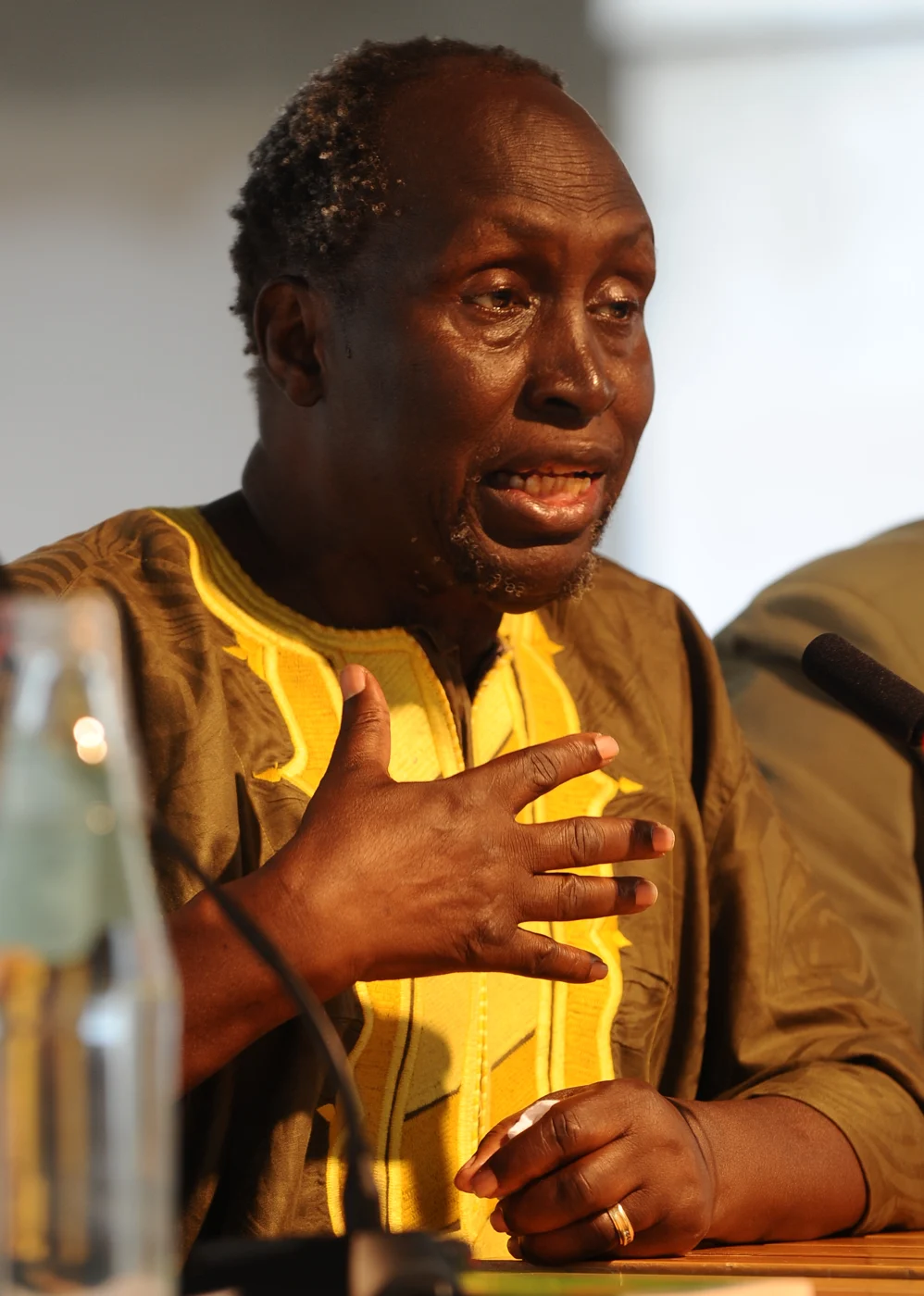
Ken Walibora
Kiswahili novelist and educator
He helped generations of readers encounter themselves in Kiswahili fiction.
- Theme
- Arts & Letters
Ken Walibora wrote novels and other works in Kiswahili, becoming widely known for Siku Njema. His writing reached readers through schools and beyond, contributing to a vibrant contemporary literature in the language.
He also worked in journalism and education. His contribution lies in treating Kiswahili as a language for complex characters, moral questions and modern experience, while helping cultivate a broad reading public.
Life and work
Kennedy Wafula Waliaula, better known by his pen name Ken Walibora (6 January 1965 – 10 April 2020) was a Kenyan writer, journalist, and scholar. He is a known figure in Kenyan Swahili literature, having authored Swahili books, which is Kenya's national language. His books Siku Njema and Kidagaa Kimemwozea were used as a national setbook for Kiswahili literature in Kenyan secondary schools.
Ken Walibora was born in Baraki, Bungoma District (present-day Bungoma County) of the Western Province in 1965 and grew up in Cherangany and Kitale. He later changed his name to Walibora, with the suffix 'bora' meaning 'better/best' in Swahili. His mother's name was Ruth Makali.
Walibora attended St. Joseph's Primary School in western Kenya for his primary education. He then pursued his high school education at Teremi school and Suremi Secondary School and at Ole Kajiado High School.
He earned his bachelor's degree from the University of Nairobi and graduated with a first-class honors degree in Literature and Swahili studies. He proceeded to do his masters at Ohio University.
He was a writer and author of books in Swahili and wrote novels, poetry, short stories and essays. His works have been translated to German, English, French and Chinese. Walibora was an advocate of Swahili literature and promoted its use and growth. He on more than one occasions called out the government on the fact that the use Swahili, which is the national language, was being restricted in learning institutions with some even having posters declaring the institutions as 'English speaking zone'.
He made contributions to book chapters and articles to academic journals, including the Research in African Literatures (RAL), Swahili Forum, Kiswahili, Canadian Journal of African Studies (CJAS), African Quarterly Review (AQR), Journal of the African Language Teachers Association (JALTA), Journal of the Association of African Literature (JALA) and Curator: The International Museum Journal.
He served as a lecturer at Wisconsin Madison University and Riara University. He also worked as a Swahili news anchor and editor at KBC and Nation Media Group as a probation officer.
Police launched an investigation into his death in line with the circumstances leading to his supposed death. His car was parked more than three kilometers from where he left his car on Friday, April 10. The government pathologist Johansen Oduor after an autopsy, revealed he had a deep cut on the space between his thumb and the index finger, consistent with self defence. Police also discovered that Walibora had been having disputes with his publisher over a book in the weeks leading to his death. There was also foul play as he was left unattended to for the entire day after having been taken to Kenyatta national hospital by an ambulance. The case was treated as a homicide and is still unresolved.
He was buried at his rural home in Makutano, Cherangany constituency in a funeral procession attended by less than 20 people as per the regulations imposed by the government to curb the spread of coronavirus. His wife and children could not attend the burial as travel restrictions prevented them from travelling to the Kenya from the US where they had been staying at the time. Friends and relatives including his brother, Patrick Lumumba who was the family's spokesperson, asked the government to resolve Walibora's murder and convict the killers.
This section adapts selected passages from Ken Walibora by Wikipedia contributors. It is shared under CC BY-SA 4.0. Selected passages; pronunciation guides, lists and reference markers omitted; punctuation and paragraph breaks adjusted. Photographs have separate licences.