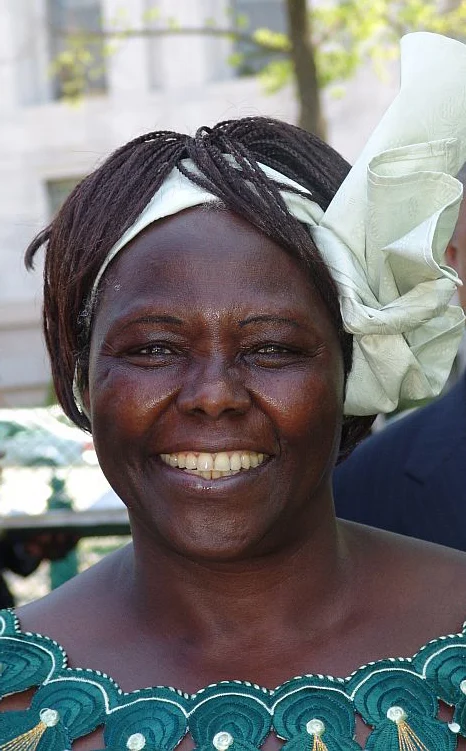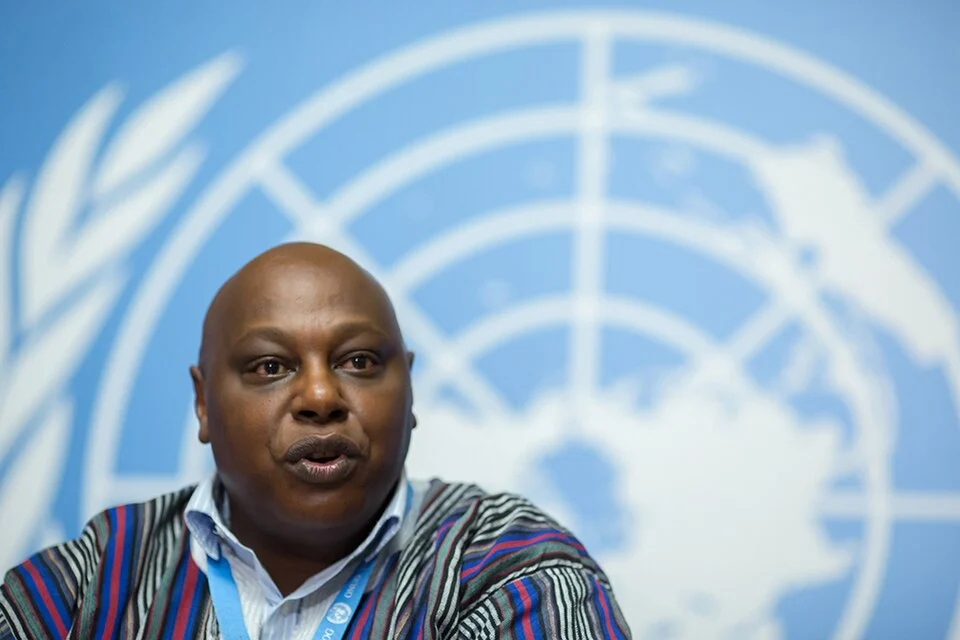
Guyinnairobi photos / CC BY-SA 4.0. Resized for the archive. Image credits.
Maina Kiai
Human rights advocate
He defended the freedom to organise and speak together.
- Theme
- Conscience
Maina Kiai's work has included leadership in Kenyan human-rights organisations and service as the United Nations Special Rapporteur on the rights to freedom of peaceful assembly and of association.
He has documented abuses and argued for civic space in which people can organise without intimidation. His contribution connects Kenya's democracy movement with international efforts to protect the rights through which communities challenge power.
Life and work
Maina Kìai is a Kenyan lawyer and human rights activist who formerly served as the United Nations Special Rapporteur on the rights to freedom of peaceful assembly and of association from May 1, 2011, to April 30, 2017. Between 2018 and 2024, he headed Human Rights Watch's Alliances and Partnerships program.
Kìai is also active in human rights work in Kenya, where he has focused on combating corruption, supporting political reform, and fighting against impunity following post-election violence that engulfed Kenya in 2008.
Kìai's most prominent human rights work began in 1992, when he co-founded the unofficial Kenya Human Rights Commission. He served as the Commission's executive director until September 1998.
Kìai then moved on to become Director of Amnesty International's Africa Program (1999-2001) and the Africa Director of the International Human Rights Law Group (now Global Rights, 2001-2003) before finally serving as Chairman of the Kenya National Human Rights Commission from 2003 to 2008.
From July 2010 to April 2011, Kìai was the Executive Director of the International Council on Human Rights Policy. He has also held research fellowships at the Danish Institute for Human Rights, the Woodrow Wilson International Center for Scholars, and the TransAfrica Forum.
Kiai co-founded the local Kenyan NGO InformAction in 2010 and co-directed it until 2019. This NGO uses a multimedia approach – primarily video production – to help educate Kenyans about their human rights. InformAction benefits from the support of the UNDP, the UNDEF on the Open Society Foundations. He formerly wrote a regular column for the Daily Nation, but resigned in 2018, citing alleged interference with publishing decisions by the government He now writes for the Standard (Kenya).
In 2014, Freedom House awarded Kiai its Freedom Award, an acknowledgment begun in 1943 "to extol recipients' invaluable contribution to the cause of freedom and democracy." Prior Freedom Award honorees include Chen Guangcheng, Aung San Suu Kyi, Václav Havel, the 14th Dalai Lama, Medgar Evers, and Edward R. Murrow.
In May 2020, Kiai was named as one of 20 inaugural members of the Facebook Oversight Board, which makes content moderation decisions on Facebook and Instagram.
Maina Kiai took up his functions as the first UN Special Rapporteur on the rights to freedom of peaceful assembly and of association on May 1, 2011. He completed his second and final term on April 30, 2017, and was succeeded by Ms. Annalisa Ciampi of Italy. Special Rapporteurs are independent from any Government or organization and serve in their individual capacity.
Kiai also made nine official country visits, to Georgia (2012), the United Kingdom (2013 & 2016), Rwanda (January 2014), Oman (September 2014), Kazakhstan (January 2015), Chile (September 2015), the Republic of Korea (January 2016) and the United States of America (July 2016).
Kiai conducted the first ever official country visit to the United States by a UN Special Rapporteur on the rights to freedom of peaceful assembly and of association in July 2016.
In August 2017, Kiai was briefly blocked from flying out of Nairobi's Jomo Kenyatta International Airport; officials claimed he needed government clearance to leave the country.
This section adapts selected passages from Maina Kìai by Wikipedia contributors. It is shared under CC BY-SA 4.0. Selected passages; pronunciation guides, lists and reference markers omitted; punctuation and paragraph breaks adjusted. Photographs have separate licences.