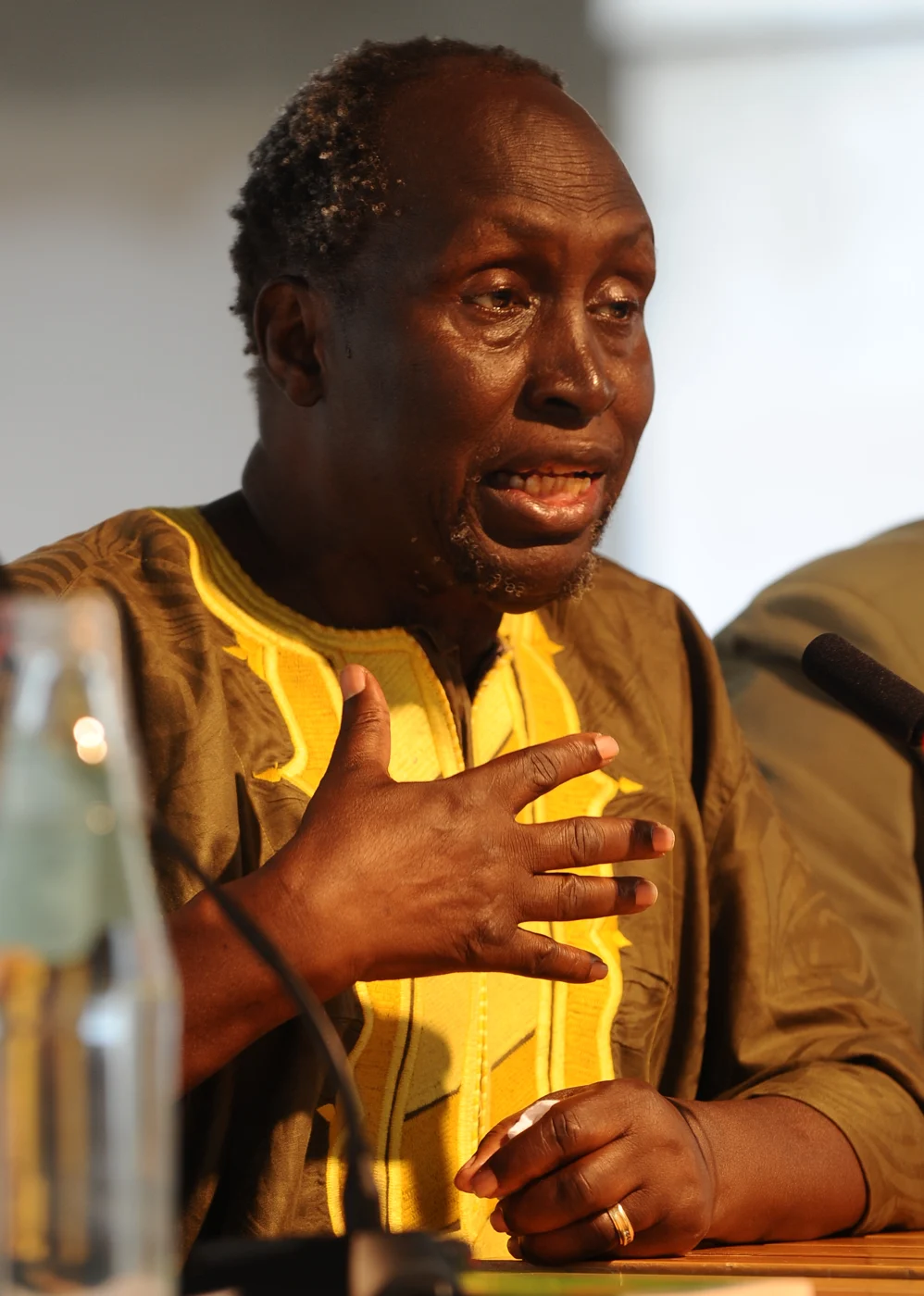
Meja Mwangi
Novelist
He gave the city's working lives room on the page.
- Theme
- Arts & Letters
Meja Mwangi's novels portray urban survival, labour and social change with a directness that helped define modern Kenyan fiction. Books such as Kill Me Quick and Going Down River Road follow people living far from the centres of privilege.
His work broadened the social world of the Kenyan novel. It made the search for work, shelter and dignity in a changing city worthy of sustained literary attention.
Life and work
David Dominic Mwangi (27 December 1948 – 11 December 2025), known by his pen name, Meja Mwangi, was a Kenyan writer. Apart from writing books, he worked in the film industry, including in screenwriting, assistant directing, and casting.
Mwangi was born David Dominic Mwangi in Nanyuki, Colony and Protectorate of Kenya, and was educated at Nanyuki Secondary School, Kenyatta College, and briefly at the University of Leeds. He then worked for the French Broadcasting Corporation doing odd jobs and the British Council in Nairobi as Visual Aids Officer, before turning to writing full-time. He was Fellow in Writing at the University of Iowa (1975–76).
After a long tenure on Kenya's and Africa's publishing scene, Mwangi moved to the United States, having gained international recognition and won several awards.
His best-known early work includes the novels Kill Me Quick (1973), Going Down River Road (1976), and The Cockroach Dance (1979), which illustrate the urban landscapes of Kenya, the struggle against poverty.
Jomo Kenyatta Prize for Literature for Kill Me Quick (1974 – English winner); The Last Plague (2001 – English winner); Boy Gift (2007 – English Youth third place); Big Chief (2009 – English Adult Fiction third place).
Deutscher Jugendliteraturpreis (German Youth Literature Prize), for Kariuki und sein weißer Freund. Eine Erzählung aus Kenia (Little White Man (1990), title changed to The Mzungu Boy (1992))
Mwangi, Meja, ed. (2002). Descente a River Road (in French). Translated by Jean-Baptiste Evette. Paris: Dapper. ISBN 978-2906067813.
The three early urban novels established a sustained interest in the distance between the city's promises and the opportunities available to people arriving there. Kill Me Quick follows young people seeking work; Going Down River Road gives labour and survival a central place. The city is therefore more than a backdrop. It is part of the pressure shaping characters' choices, relationships and expectations.
Mwangi also wrote beyond that early sequence. His bibliography includes Carcase for Hounds, Striving for the Wind, The Last Plague and The Mzungu Boy, alongside works for younger readers. The range matters because a writer's first reputation can conceal the work that follows it. His career included several audiences and forms rather than a single repeated subject.
His screen work included assistant-directing and casting roles, with credits associated with Out of Africa, White Mischief and The Kitchen Toto. Those roles connect literary work with the collaborative practice of film production. The contribution of a writer can include shaping a production behind the camera as well as producing a manuscript under an individual name.
His place in the archive recognises an author who widened the social world of Kenyan fiction. Lives on the margins of formal prosperity were given sustained attention, humour and narrative force. The work made those lives part of a national literary conversation.
This section adapts selected passages from Meja Mwangi by Wikipedia contributors. It is shared under CC BY-SA 4.0. Selected and edited passages, with additional editorial context; lists and reference markers omitted; punctuation and paragraph breaks adjusted. Photographs have separate licences.