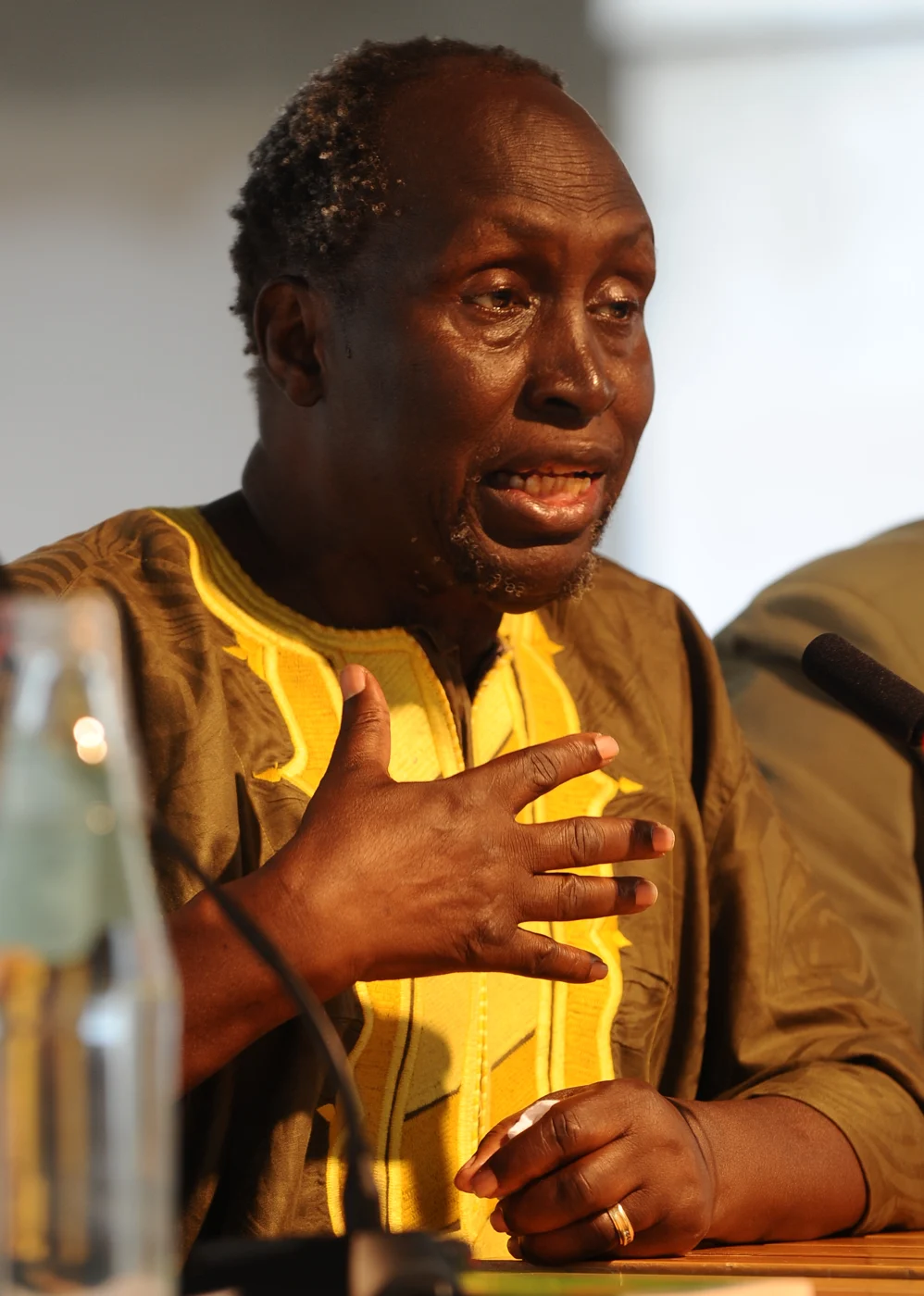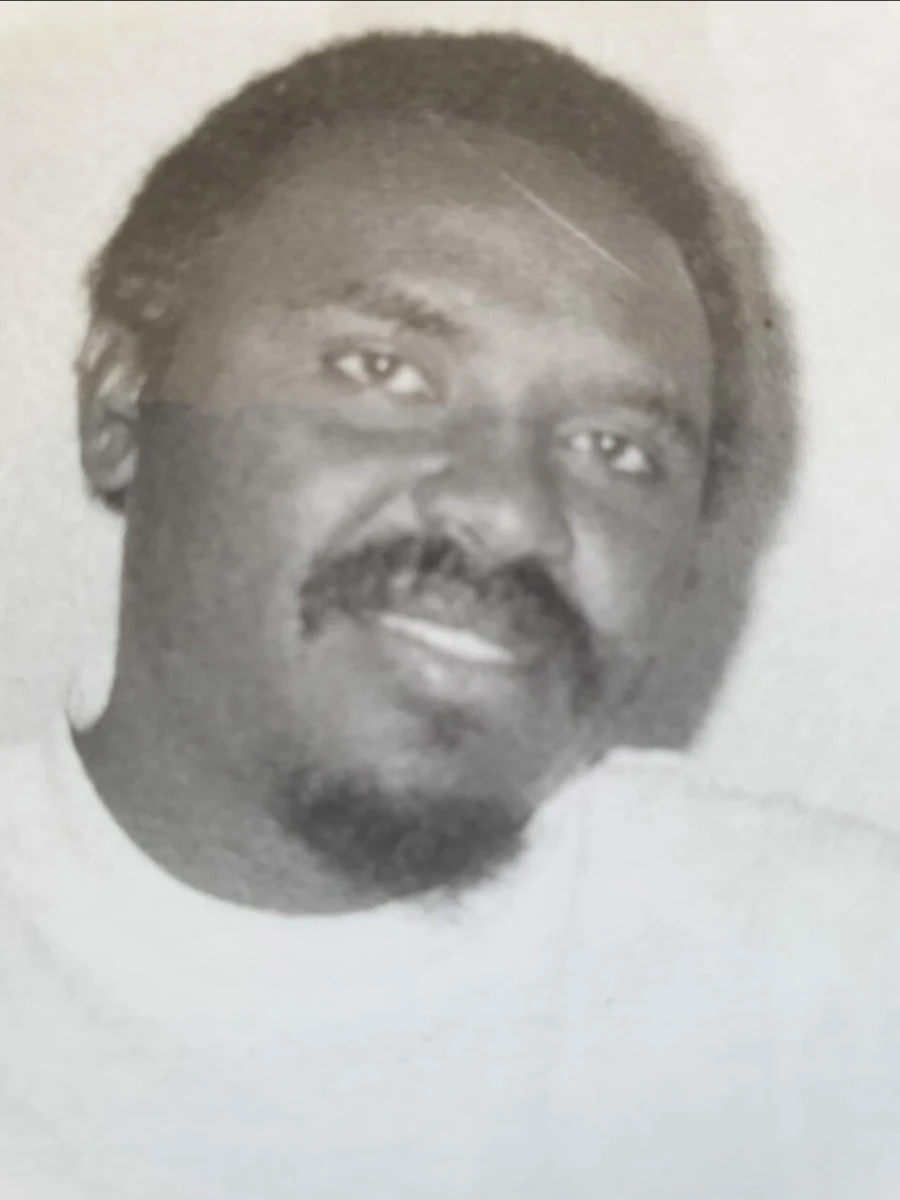
Kish Ngugi / CC BY-SA 4.0. Resized for the archive. Image credits.
Ngũgĩ wa Mirii
Playwright and community-theatre organiser
He helped make theatre with the people whose lives it described.
- Theme
- Arts & Letters
Ngũgĩ wa Mirii co-wrote Ngaahika Ndeenda, known in English as I Will Marry When I Want, with Ngũgĩ wa Thiong'o. The play grew from community theatre at Kamĩrĩĩthũ and examined land, labour, religion and inequality.
Political pressure forced him into exile. His work is remembered for the idea that theatre could be created and performed with communities, using a language and setting in which participants recognised their own lives.
Life and work
Ngũgĩ wa Mirii (1951 – 2/3 May 2008) was a Kenyan-Zimbabwean playwright, social worker and teacher, most known for his play Ngaahika Ndeenda, which he co-authored with fellow Gikuyu writer Ngũgĩ wa Thiong'o. The play depicts the injustices and excesses of post-colonial Kenya, and was staged by non-intellectuals in an open-air theatre at the Kamirithu Educational and Cultural Center in Limuru.
Born in Roromo, Limuru, Kenya, Ngũgĩ wa Mirii was the second born in a family of six children born to John Mirii and Elizabeth Wanjiku. He was educated at Ngenia Secondary School and from 1972 to 1974 worked with the Kenya Posts and Telecommunications Corporation. He obtained a diploma in Adult Education at the Institute of Adult Studies, Nairobi University, and then joined the Institute of Development Studies. While working there he became involved with peasants and workers in community development at Kamiriithu, Limuru.
In 1977, Ngũgĩ wa Mirii and Ngũgĩ wa Thiong'o co-authored a play titled Ngaahika Ndeenda (I Will Marry When I Want). Both playwrights were arrested six weeks after the play debuted, and detained in prison.
Five years later, their next play Mother Cry for Me, forced both playwrights into exile, with Ngũgĩ wa Mirii settling in Zimbabwe while Ngũgĩ wa Thiong'o fled first to Britain, and then to the United States.
In 1982, Ngũgĩ wa Mirii fled to Zimbabwe where he lived in exile. Ngũgĩ wa Mirii was joined a year later by his wife, Wairimu wa Ngũgĩ and one-year-old daughter, Elizabeth Wanjiku Ngũgĩ. He then joined Zimbabwean Foundation for Education with Production (ZIMFEP) where he worked for several years.
In Zimbabwe, he wrote extensively about the Pan-African cause. In 1985, he was awarded funding to found the Zimbabwean Association of Community Theatre. He was granted Zimbabwean citizenship shortly after.
Community theatre changes who can enter a literary conversation. When performers and audiences recognise the language, work and relationships on stage, a play becomes a shared occasion for examining their circumstances. Wa Mirii's contribution to Kamĩrĩĩthũ was part of that process. Remembering the collaboration also prevents the project's history from being reduced to the reputation of its most internationally famous writer. Its significance depended on co-authorship, performers, organisers and the people whose experience gave the theatre its substance. Exile interrupted that work in Kenya, but did not erase its influence on ideas about popular education and cultural participation.
Theatre's public character was part of its force. Unlike a book read privately, a performance brought people together at a shared time and place, making the act of cultural participation itself visible within the community.
That shared experience was integral to the theatre's political and cultural significance.
This section adapts selected passages from Ngũgĩ wa Mirii by Wikipedia contributors. It is shared under CC BY-SA 4.0. Selected and edited passages, with additional editorial context; lists and reference markers omitted; punctuation and paragraph breaks adjusted. Photographs have separate licences.