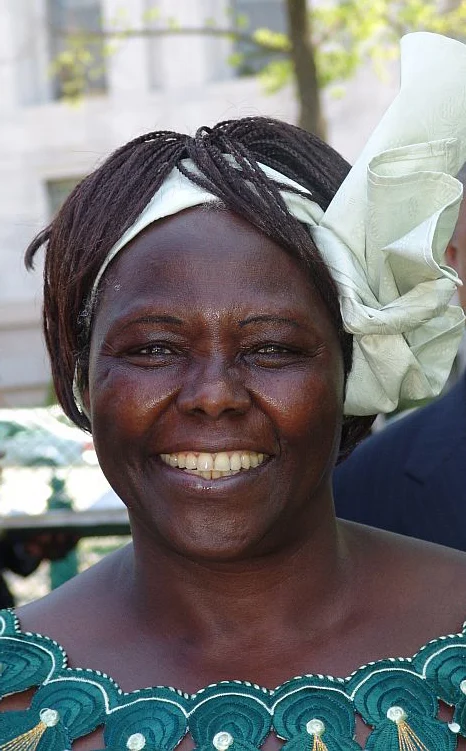
Yash Pal Ghai
Constitutional scholar
He helped turn constitutional ideas into a public conversation.
- Theme
- Conscience
Yash Pal Ghai contributed to constitution making in Kenya and other countries, combining legal scholarship with attention to participation, minority rights and the practical distribution of power.
Through his work on Kenya's constitutional review and with Katiba Institute, he helped explain how a constitution can protect people in everyday life. His contribution belongs to both the drafting of institutions and the public work of making them understandable.
Life and work
Yash Pal Ghai, CBE (born 20 October 1938) is a Kenyan academic in constitutional law. As of 2007, he was the head of the Constitution Advisory Support Unit of the United Nations Development Programme in Nepal. Until 2008, he was a Special Representative of the UN Secretary General in Cambodia on human rights. In September 2008, he resigned his post, following bitter arguments with the Government of Cambodia. He has been a Fellow of the British Academy since 2005.
His grandparents were from the Khukhrain family-group of Khatris, who came from the Punjab region of North India, and were part of the waves of Indian migration in East Africa, sponsored by the British Empire. His father sent Ghai to Oxford University to study.
He was the Sir YK Pao Professor of Public Law at the University of Hong Kong starting in 1989. He has been an Honorary Professor there since his retirement in 2005. Prior to that, Ghai taught and did research in law at the University of Warwick, Uppsala University in Sweden, the International Legal Center in New York City, and Yale Law School. He has also taught courses at the University of Wisconsin Law School, as part of an exchange program.
He was the Chairman of the Constitution of Kenya Review Commission (which attempted to write a modern constitution for Kenya) from 2000 to 2004. Professor Ghai was also selected by the Fijian Military Government to be the Chairperson of Fiji's Constitutional Committee.
Ghai has also advised and assisted NGOs on human rights law-related work. He drafted the Asian Human Rights Charter; A People's Charter, a project of the Asian Human Rights Commission.
Constitution making is more than the production of a legal document. It involves deciding who belongs, which institutions can exercise power, and what happens when the government violates a person's rights. Ghai's work on Kenya's review process placed him at the meeting point of these questions. Public participation mattered because a constitution claiming the authority of the people needed more than approval from political leaders.
His international career also puts Kenya's constitutional debates in a wider setting. Countries emerging from colonial rule or political conflict face different circumstances, but frequently confront related questions about representation and the protection of minorities. His scholarship and advisory work connected these debates without making any single national experience a universal model. In Kenya, his continuing association with constitutional education helped keep attention on implementation: the distance between what a charter promises and what a person can actually obtain from public institutions.
His drafting of the Asian Human Rights Charter further connects constitutional scholarship with civil society's efforts to articulate common standards of dignity and accountability.
This section adapts selected passages from Yash Ghai by Wikipedia contributors. It is shared under CC BY-SA 4.0. Selected and edited passages, with additional editorial context; lists and reference markers omitted; punctuation and paragraph breaks adjusted. Photographs have separate licences.